
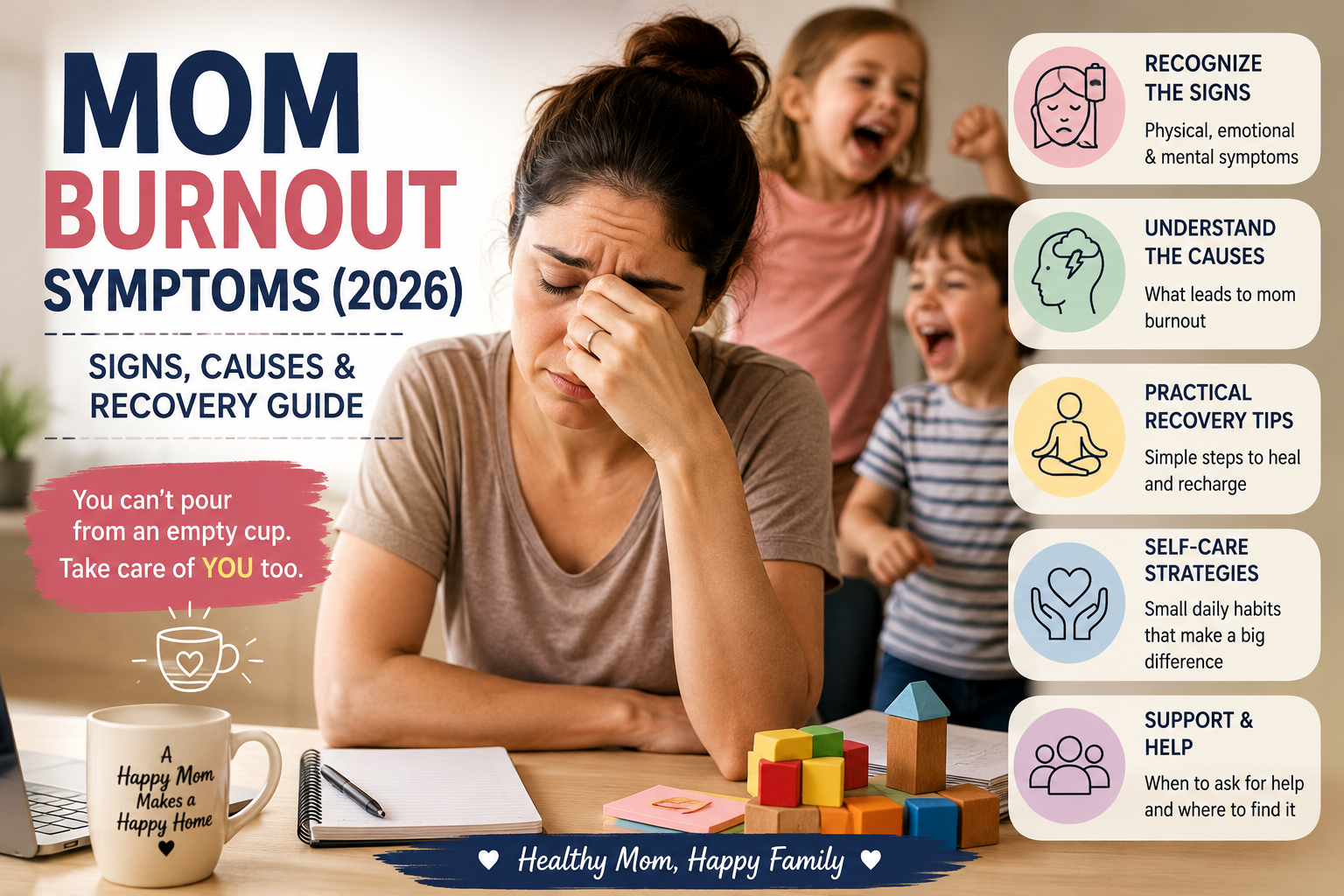

Motherhood is one of the most rewarding experiences in life, but it can also be physically, mentally, and emotionally demanding. Between caring for children, managing household responsibilities, balancing work, and meeting everyone’s needs, many mothers put themselves last.
Feeling tired after a busy day is completely normal. However, when exhaustion becomes constant, motivation disappears, and even simple daily tasks feel overwhelming, it could be a sign of mom burnout.
Mom burnout is becoming increasingly common among working mothers, stay-at-home moms, single parents, and caregivers. Yet many women ignore the warning signs, believing they simply need to “push through.”
Understanding the symptoms early can help mothers take positive steps before burnout affects their health, relationships, and overall quality of life.
In this guide, we’ll explore the most common mom burnout symptoms, what causes them, how burnout differs from everyday stress, and practical ways to begin the recovery process.
Related: Feeling overwhelmed? Try these simple Breathing Exercises for Calmness.
What Is Mom Burnout?
Mom burnout is a state of physical, emotional, and mental exhaustion caused by prolonged stress and the continuous demands of parenting without adequate rest, support, or self-care.
Unlike temporary tiredness, burnout develops gradually over time and can make mothers feel overwhelmed, disconnected, and emotionally drained.
It doesn’t mean you’re a bad parent or that you don’t love your children.
Instead, burnout is often a sign that you’ve been giving so much of yourself that your own emotional and physical needs have been neglected.
Why Is Mom Burnout Becoming More Common?
Modern mothers often juggle multiple responsibilities every day.
Many women are expected to:
- Care for children
- Manage household chores
- Work full-time
- Help with homework
- Care for elderly family members
- Maintain relationships
- Handle finances
- Stay socially connected
This constant balancing act leaves very little time for rest or personal wellbeing.
Social media can also create unrealistic expectations, making mothers feel pressured to be “perfect” in every aspect of parenting.
Related: Taking care of your physical health is one of the best ways to prevent emotional exhaustion. Read our Fitness for Mothers in India: Postpartum Workout Tips & Health Guide.
Common Mom Burnout Symptoms
Recognizing the signs early is the first step toward recovery.
1. Constant Physical Exhaustion
Every parent experiences tiredness occasionally.
Burnout, however, feels different.
Even after sleeping, you may still feel:
- Drained
- Low on energy
- Physically weak
- Unable to complete simple tasks
You may wake up already feeling exhausted before the day even begins.
2. Emotional Overwhelm
Small problems suddenly feel much bigger.
You may find yourself:
- Crying easily
- Feeling emotionally numb
- Becoming frustrated quickly
- Feeling unable to cope
Everyday parenting challenges begin to feel overwhelming.
3. Irritability
One of the earliest warning signs is increased irritability.
You may notice yourself:
- Raising your voice more often
- Becoming impatient
- Feeling annoyed by small things
- Losing your temper more easily
This doesn’t mean you’re a bad mother—it often means your emotional reserves are running low.
4. Feeling Like You’re Never Doing Enough
Many mothers experiencing burnout constantly feel guilty.
Common thoughts include:
- “I’m failing as a mom.”
- “Everyone else seems to manage better.”
- “I should be doing more.”
- “I’m not good enough.”
Persistent self-criticism can make burnout even worse.
5. Loss of Motivation
Activities you once enjoyed may no longer bring happiness.
You may lose interest in:
- Hobbies
- Cooking
- Exercise
- Meeting friends
- Family outings
Everything starts to feel like another task on your to-do list.
6. Difficulty Concentrating
Mental exhaustion often affects memory and focus.
You might:
- Forget appointments
- Misplace everyday items
- Lose track of conversations
- Find it hard to make decisions
This mental fatigue is sometimes referred to as “mom brain,” but persistent concentration problems may also be linked to burnout.
7. Sleep Problems
Burnout doesn’t always mean sleeping more.
Many mothers experience:
- Difficulty falling asleep
- Waking during the night
- Restless sleep
- Early morning waking
Poor sleep further increases exhaustion the following day.
8. Feeling Emotionally Disconnected
Some mothers describe feeling emotionally distant from:
- Their children
- Their partner
- Friends
- Family
They may continue caring for everyone while feeling emotionally empty inside.
9. Increased Anxiety
Burnout often causes constant worrying.
Common concerns include:
- Children’s health
- School performance
- Finances
- Household responsibilities
- Future plans
The mind rarely feels truly relaxed.
10. Frequent Headaches and Body Pain
Stress doesn’t only affect emotions.
It may also contribute to:
- Headaches
- Neck pain
- Shoulder tension
- Back pain
- Muscle aches
- Digestive discomfort
Physical symptoms are often the body’s way of signalling that it needs rest.
Emotional Symptoms of Mom Burnout
Many signs are emotional rather than physical.
You may experience:
- Feeling unappreciated
- Feeling lonely
- Constant guilt
- Hopelessness
- Loss of confidence
- Feeling trapped
- Lack of patience
- Emotional numbness
These emotions can gradually affect relationships and self-esteem.
Also Read: If you’re feeling overwhelmed, try these simple relaxation techniques in our guide 7 Easy Breathing Exercises for Calmness to Take the Stress Away in Minutes for Overwhelmed Moms.
Physical Symptoms of Mom Burnout
Burnout can affect the entire body.
Possible physical symptoms include:
- Fatigue
- Poor sleep
- Frequent illness
- Appetite changes
- Hair fall
- Digestive problems
- Low immunity
- Weight changes
These symptoms may also have other medical causes, so persistent health concerns should be discussed with a healthcare professional.
What Causes Mom Burnout?
There is rarely a single cause.
Instead, burnout often develops when several factors build up over time.
Common causes include:
Lack of Sleep
Interrupted sleep due to babies, young children, or stress makes recovery difficult.
No Personal Time
Many mothers spend every waking hour caring for others while neglecting their own needs.
Even 20–30 minutes of personal time each day can make a meaningful difference.
Unrealistic Expectations
Trying to be the “perfect mom” often leads to disappointment and unnecessary pressure.
Perfection isn’t the goal—connection is.
Lack of Support
Parenting becomes much harder without emotional or practical support.
Many mothers hesitate to ask for help because they fear being judged.
Financial Pressure
Managing household expenses, childcare costs, and work responsibilities can contribute significantly to ongoing stress.
Working Mom Burnout
Working mothers often experience two full-time jobs:
- Professional responsibilities
- Household responsibilities
Balancing both without adequate support increases the risk of burnout.
Stay-at-Home Mom Burnout
Staying home with children can also be emotionally exhausting.
Many stay-at-home mothers experience:
- Isolation
- Lack of adult conversation
- Constant caregiving
- Feeling invisible
Their work is demanding even if it isn’t always recognized.
Recommended: Finding balance between motherhood and your personal identity is equally important. Read Motherhood v/s Wifehood: Finding Harmony, Not Competition.
Mom Burnout vs Normal Tiredness
| Normal Tiredness | Mom Burnout |
|---|---|
| Improves after rest | Continues even after sleeping |
| Temporary | Lasts for weeks or months |
| Motivation returns | Motivation stays low |
| Stress comes and goes | Constant emotional exhaustion |
| Daily tasks remain manageable | Everyday tasks feel overwhelming |
If exhaustion is persistent and begins affecting daily life, it may be time to slow down and seek support.
How to Recover from Mom Burnout
Recovering from burnout doesn’t happen overnight, but small, consistent changes can make a meaningful difference. The goal isn’t to become a “perfect mom”—it’s to become a healthier, happier version of yourself.
1. Accept That Burnout Is Real
Many mothers dismiss their feelings by saying:
- “I’m just tired.”
- “Every mom feels like this.”
- “I should be able to handle it.”
Acknowledging burnout isn’t a sign of weakness—it’s the first step toward recovery.
2. Prioritize Sleep
Sleep is one of the most effective ways to support physical and emotional recovery.
Try to:
- Go to bed at the same time each night.
- Reduce screen time before sleep.
- Share nighttime responsibilities when possible.
- Nap when your schedule allows.
Quality sleep helps improve mood, focus, and energy levels.
3. Ask for Help
You don’t have to do everything alone.
Consider asking your:
- Partner
- Parents
- Friends
- Siblings
- Trusted neighbors
for help with childcare, meals, or household tasks.
Accepting support is a healthy parenting choice—not a failure.
4. Make Time for Yourself
Even 20–30 minutes each day can improve emotional wellbeing.
Use this time to:
- Read a book
- Take a walk
- Practice yoga
- Listen to music
- Journal
- Enjoy a hobby
- Sit quietly with a cup of tea
Self-care isn’t selfish—it helps you care for others more effectively.
5. Reduce Unrealistic Expectations
Social media often highlights perfect moments rather than everyday reality.
Remember:
- A messy house doesn’t mean you’re failing.
- Frozen meals are okay sometimes.
- Children don’t need perfect parents—they need loving, emotionally available parents.
Progress is more important than perfection.
6. Stay Connected
Isolation can make burnout feel worse.
Stay connected with:
- Friends
- Family
- Parenting groups
- Support communities
Even a short conversation with someone who understands can reduce emotional stress.
7. Move Your Body
Physical activity supports both physical and mental health.
Simple options include:
- Walking
- Stretching
- Yoga
- Dancing
- Cycling
- Home workouts
Exercise releases endorphins, which can naturally improve mood.
A Simple Daily Self-Care Plan
You don’t need hours of free time.
Try this realistic daily routine:
Morning
- Drink water.
- Take five deep breaths.
- Eat breakfast.
Afternoon
- Take a short walk.
- Step away from your phone for 15 minutes.
Evening
- Spend quality time with family.
- Read or listen to calming music.
- Sleep at a consistent time.
Small habits practiced consistently often have the greatest long-term impact.
Printable Mom Burnout Self-Assessment Checklist
Ask yourself:
☐ I feel exhausted most days.
☐ I struggle to enjoy activities I once loved.
☐ I feel guilty no matter how much I do.
☐ I become irritated over small things.
☐ I rarely have time for myself.
☐ I often feel emotionally overwhelmed.
☐ I have trouble sleeping.
☐ I constantly feel like I’m failing.
☐ I feel disconnected from family or friends.
☐ I find it difficult to concentrate.
If you checked several of these statements and these feelings have persisted for weeks, it may be helpful to seek additional support from loved ones or a qualified healthcare professional.
When Should You Seek Professional Help?
Sometimes burnout becomes more severe and requires additional support.
Consider speaking with a healthcare professional if:
- Feelings of sadness persist for several weeks.
- Anxiety interferes with daily life.
- Sleep problems continue despite healthy habits.
- You lose interest in everyday activities.
- You feel unable to cope with daily responsibilities.
- You have thoughts of harming yourself or feel that life isn’t worth living.
Professional support can make a significant difference, and reaching out is a sign of strength.
Parenting Tip: Gentle parenting can reduce stress for both mothers and children. Explore 5 Gentle Parenting Tips Every Mom Should Know in 2026.
How Partners Can Help
Partners play an important role in reducing burnout.
Helpful ways to provide support include:
- Share household responsibilities.
- Offer regular breaks.
- Listen without judgment.
- Encourage rest.
- Appreciate daily efforts.
- Spend one-on-one time with the children.
- Plan occasional family outings.
Sometimes the most meaningful support is simply asking:
“What can I do today to make your day easier?”
How Friends and Family Can Help
Loved ones can support mothers by:
- Offering childcare for a few hours.
- Delivering a meal.
- Checking in regularly.
- Helping with errands.
- Providing emotional encouragement.
- Respecting personal boundaries.
Small acts of kindness often make a big difference.
Frequently Asked Questions
What are the first signs of mom burnout?
Early signs include constant exhaustion, irritability, feeling overwhelmed, loss of motivation, sleep problems, difficulty concentrating, and feeling like you’re never doing enough.
Is mom burnout the same as postpartum depression?
No.
While both can involve exhaustion and emotional distress, postpartum depression is a medical condition that requires professional evaluation and treatment. Burnout results from prolonged stress and caregiving demands, although the two can sometimes overlap.
Can stay-at-home moms experience burnout?
Yes.
Stay-at-home mothers often manage continuous caregiving, household responsibilities, and limited personal time, making burnout common.
Can working moms experience burnout?
Absolutely.
Balancing professional responsibilities with parenting and household duties can significantly increase emotional and physical stress.
How long does mom burnout last?
Recovery varies from person to person. With adequate rest, support, healthy routines, and professional guidance when needed, many mothers gradually begin to feel better over time.
New Moms: Pregnancy and postpartum recovery can be emotionally challenging. Explore our Pregnancy Week 27: Symptoms, Baby Growth & What to Expect guide.
Final Thoughts
Being a mother doesn’t mean you have to carry every responsibility alone.
Burnout is not a sign that you’re failing—it often means you’ve been caring for everyone else while forgetting to care for yourself.
Remember:
- You deserve rest.
- You deserve support.
- You deserve kindness—including from yourself.
Taking care of your own wellbeing isn’t separate from good parenting; it’s an essential part of it.
When mothers feel healthier, children benefit from calmer homes, stronger relationships, and more meaningful family moments.
Trusted Resources & Further Reading
If you’d like to learn more about parental burnout, stress management, and mental wellbeing, these expert resources provide evidence-based guidance for mothers and families.
- UNICEF Parenting – Mental Health & Well-Being for Parents and Families
- HealthyChildren.org (American Academy of Pediatrics) – Feeling Overwhelmed with Parenting Demands
- American Psychological Association (APA) – Understanding Parental Burnout
- U.S. Department of Health & Human Services – Parents Under Pressure Report
- UNICEF – The State of the World’s Children: Mental Health Report
Editorial Note: This article is based on guidance and research from trusted organizations including UNICEF, the American Academy of Pediatrics (AAP), the American Psychological Association (APA), and the U.S. Department of Health & Human Services. While occasional stress is a normal part of parenting, persistent emotional exhaustion, anxiety, or feelings of hopelessness should be discussed with a qualified healthcare professional. Seeking support is a positive step toward better wellbeing for both mothers and their families.