
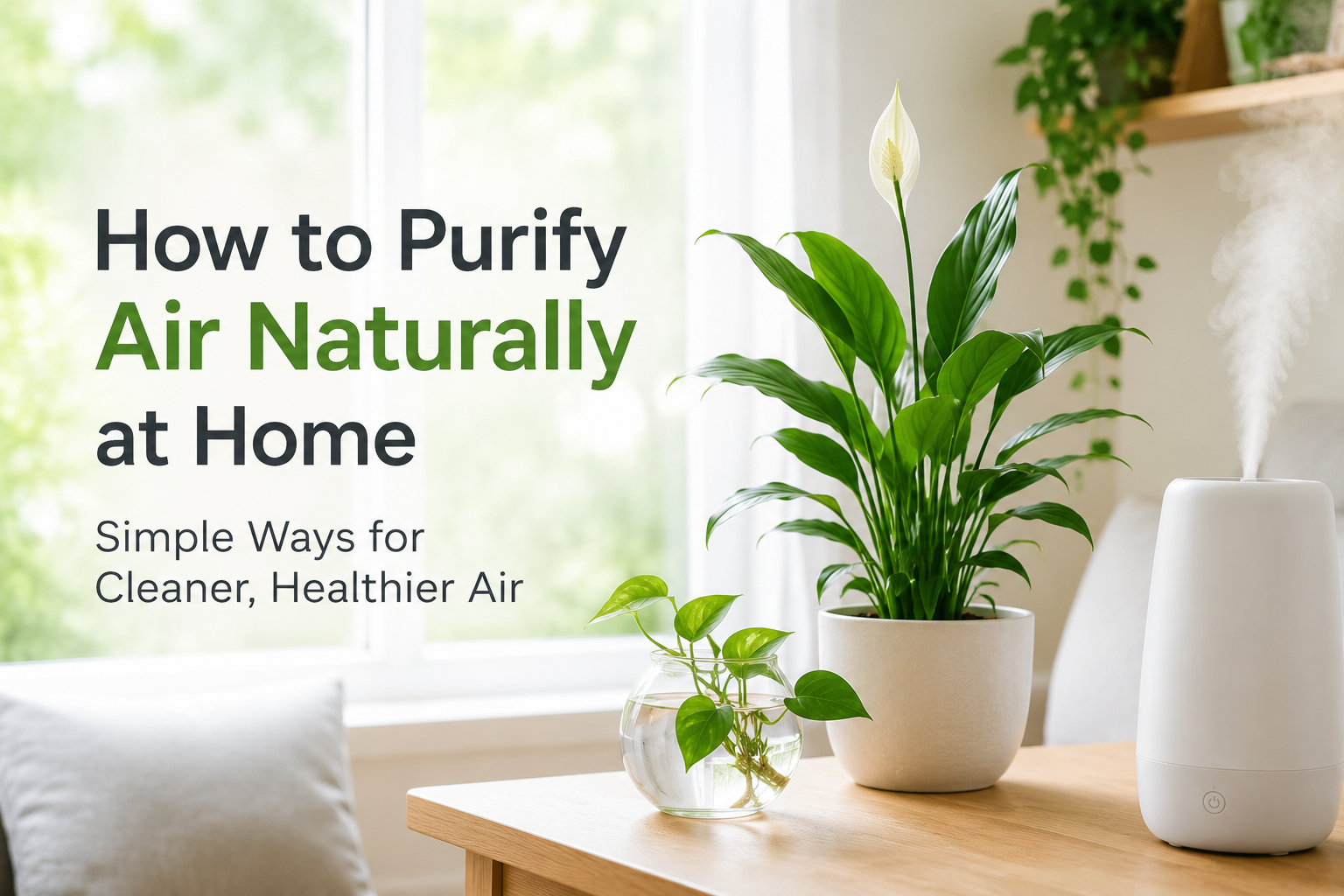

Indoor air quality plays a significant role in our overall health and well-being. While many people focus on outdoor pollution, the air inside our homes can also contain dust, allergens, pet dander, mold spores, volatile organic compounds (VOCs), and other pollutants. According to environmental health experts, improving indoor air quality can help create a healthier living environment, especially for children, older adults, and people with allergies or asthma.
If you’ve ever wondered, “How can I purify air naturally at home?”, the good news is that there are several simple and affordable ways to improve indoor air quality without relying entirely on expensive air purifiers. Small changes in daily habits, better ventilation, regular cleaning, and introducing natural elements into your home can make a noticeable difference.
In this guide, we’ll explore practical, science-backed ways to naturally purify the air in your home while also highlighting common mistakes to avoid.
Quick Answer: The best natural ways to purify indoor air include improving ventilation, reducing indoor pollutants, cleaning regularly, controlling humidity, avoiding indoor smoking, maintaining HVAC filters, and using houseplants as part of an overall indoor air quality strategy. Plants alone should not be relied upon to remove harmful pollutants from indoor air.
Why Is Indoor Air Quality Important?
Most people spend a large portion of their day indoors. Poor indoor air quality may contribute to:
- Allergies
- Eye irritation
- Sneezing
- Headaches
- Respiratory discomfort
- Asthma flare-ups in susceptible individuals
- Unpleasant odors
Children and older adults are often more sensitive to airborne irritants because their respiratory systems are more vulnerable.
If you’re raising young children, maintaining a healthy home environment is just as important as tracking their growth. Explore our guide on Child Development Milestones: Birth to 5 Years
Common Sources of Indoor Air Pollution
Understanding the source of pollution is the first step toward cleaner air.
Common indoor pollutants include:
- Dust
- Pet hair and dander
- Mold
- Cigarette smoke
- Cooking fumes
- Cleaning chemicals
- Paints
- Air fresheners
- Candles
- Furniture that releases VOCs
Reducing these sources often improves indoor air quality more effectively than masking odors.
1. Open Windows Daily
Fresh outdoor air helps dilute indoor pollutants.
Whenever outdoor air quality is good:
- Open windows for 15–30 minutes.
- Create cross ventilation.
- Allow fresh air to circulate.
This simple habit can reduce stale indoor air and improve comfort.
2. Keep Your Home Clean
Dust traps allergens and other microscopic particles.
Regularly:
- Vacuum carpets.
- Mop floors.
- Wipe surfaces.
- Wash curtains.
- Clean ceiling fans.
Using a vacuum with a HEPA filter can help reduce fine dust particles.
3. Control Indoor Humidity
Excess moisture encourages mold growth.
Aim for indoor humidity between 30% and 50%.
To reduce excess humidity:
- Fix water leaks promptly.
- Use exhaust fans in kitchens and bathrooms.
- Dry wet surfaces quickly.
- Avoid standing water indoors.
4. Use Exhaust Fans While Cooking
Cooking releases smoke, grease particles, and moisture.
Always:
- Turn on your kitchen exhaust fan.
- Vent cooking fumes outside whenever possible.
- Clean grease filters regularly.
This reduces airborne particles and lingering odors.
5. Avoid Indoor Smoking
Tobacco smoke contains thousands of chemicals and can remain on surfaces and in the air.
Creating a smoke-free home is one of the most effective ways to protect indoor air quality, especially for children.
6. Maintain Air Conditioner & HVAC Filters
Dirty filters recirculate dust.
Replace or clean filters according to the manufacturer’s recommendations.
Clean filters can:
- Improve airflow.
- Reduce dust.
- Increase energy efficiency.
7. Reduce Chemical-Based Air Fresheners
Many air fresheners mask odors instead of removing pollutants.
Instead:
- Improve ventilation.
- Eliminate odor sources.
- Empty trash regularly.
- Clean fabrics and upholstery.
Choosing fragrance-free cleaning products may also help people who are sensitive to scents.
8. Use Houseplants Wisely
Houseplants can make a home feel fresher and more inviting.
Popular indoor plants include:
- Snake Plant
- Spider Plant
- Peace Lily
- Areca Palm
- Bamboo Palm
While laboratory studies have shown that plants can absorb certain compounds under controlled conditions, research suggests they should not be relied upon as the primary method for cleaning indoor air in typical homes. Good ventilation and source control remain far more effective.
9. Wash Bedding Frequently
Beds collect:
- Dust mites
- Skin cells
- Pet hair
- Allergens
Wash bedding weekly using warm water whenever appropriate for the fabric.
10. Keep Shoes Outside
Shoes bring in:
- Dirt
- Pollen
- Bacteria
- Dust
- Pesticide residues
Creating a no-shoes policy helps reduce contaminants entering your home.
11. Reduce Clutter
Clutter collects dust.
Organized homes are generally easier to clean and maintain.
Store unnecessary items in closed cabinets whenever possible.
12. Groom Pets Regularly
Pet hair and dander contribute to indoor allergens.
Brush pets regularly according to their grooming needs and wash pet bedding frequently to help reduce loose hair and dander around the home.
13. Vacuum Upholstery and Curtains
Soft furnishings trap airborne particles.
Don’t forget to clean:
- Sofas
- Mattresses
- Curtains
- Cushions
- Rugs
Regular cleaning helps remove accumulated dust and allergens.
14. Choose Low-VOC Products
Some paints, adhesives, furniture, and household products release volatile organic compounds (VOCs).
When possible, choose:
- Low-VOC paints
- Low-emission furniture
- Low-odor products
Allow newly purchased furniture or freshly painted rooms to air out before extended use.
15. Maintain Good Ventilation Year-Round
Good ventilation remains one of the most effective strategies for improving indoor air quality.
Simple habits include:
- Opening windows when outdoor conditions allow.
- Using exhaust fans.
- Cleaning vents.
- Replacing filters.
- Allowing fresh air circulation.
Natural Ways to Keep Your Home Fresh
Besides improving air quality, these habits also create a healthier living environment:
- Bring fresh flowers occasionally.
- Keep indoor plants healthy.
- Empty garbage daily.
- Clean refrigerators regularly.
- Dry wet towels quickly.
- Wash reusable cleaning cloths often.
Mistakes to Avoid
Avoid these common mistakes:
- Smoking indoors.
- Ignoring mold.
- Using too many scented products.
- Forgetting HVAC maintenance.
- Blocking ventilation.
- Letting dust accumulate.
- Assuming plants alone can clean indoor air.
Frequently Asked Questions
Can plants purify indoor air?
Plants can contribute to a pleasant indoor environment, but research indicates they are not a substitute for proper ventilation, source control, and regular cleaning.
How often should I open my windows?
When outdoor air quality and weather permit, opening windows for 15–30 minutes each day can help improve ventilation.
What is the biggest cause of poor indoor air quality?
Common contributors include dust, smoke, mold, excess moisture, cooking fumes, chemical products, and inadequate ventilation.
Are air fresheners good for indoor air?
They usually mask odors rather than remove pollutants. Eliminating the source of odors is generally a better approach.
How can I reduce dust naturally?
Vacuum regularly, mop floors, wash bedding, reduce clutter, groom pets, and maintain clean air filters.
Helpful Resources
For practical family health advice, explore our Parenting Tips.
You can also learn more about indoor air quality and healthy homes from trusted organizations such as EPA Indoor Air Quality (https://www.epa.gov/indoor-air-quality-iaq), CDC Healthy Homes (https://www.cdc.gov/healthyhomes/), and WHO (https://www.who.int/).
Conclusion
Naturally purifying the air in your home doesn’t require complicated solutions. The most effective approach combines regular cleaning, good ventilation, moisture control, proper maintenance, and reducing pollution sources. While houseplants can add beauty and contribute to a calming atmosphere, they work best as part of a broader strategy rather than as a standalone air-cleaning solution.
By adopting these simple habits, you can create a fresher, healthier indoor environment for yourself and your family while reducing exposure to common indoor pollutants.