


Edited by: MomSaathi Editorial Team
Reviewed by: Based on trusted medical sources and maternity care practices
If you’ve found yourself scrolling through your phone while lying on the cool bathroom floor, wondering if you’ll ever enjoy the smell of coffee again—welcome to the first trimester.
Morning sickness (which we all know is a 24-hour reality) affects up to 80% of pregnant women. While it’s a sign that your pregnancy hormones are surging and your baby is growing, that doesn’t make the nausea any easier to handle. At MomSaathi, we’ve gathered the most effective, science-backed, and “tried-and-tested” remedies from around the world to help you reclaim your day.
Why Is This Happening? Understanding the “Why”
Before we dive into the cures, it helps to know the cause. The primary culprit is hCG (human Chorionic Gonadotropin), the “pregnancy hormone.” Levels peak around weeks 9–11, which is often when nausea is at its worst. Your body is also hypersensitive to smells to protect the fetus from potentially “spoiled” foods—a biological survival mechanism that unfortunately makes your fridge smell like a biohazard.
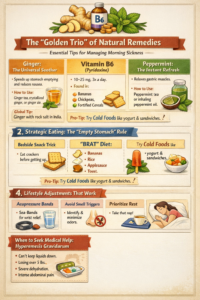
1. The “Golden Trio” of Natural Remedies
These three ingredients are used globally, from traditional Indian kitchens to modern clinical practices.
Ginger: The Universal Soother
Ginger contains gingerols and shogaols, which help speed up stomach emptying and reduce the “queasy” feeling.
-
How to use: Fresh ginger tea, crystallized ginger, or ginger ale (check that it contains real ginger).
-
Global Tip: In India, a small slice of fresh ginger with a pinch of rock salt is a classic remedy.
Vitamin B6 (Pyridoxine)
Medical professionals often recommend B6 as the first line of defense. It helps the body process certain amino acids that can reduce nausea.
-
Dosage: Usually 10–25 mg three times a day (always consult your doctor first).
-
Food Sources: Bananas, chickpeas, and fortified cereals.
Peppermint: The Instant Refresh
Peppermint relaxes the gastric muscles.
-
How to use: Sipping peppermint tea or simply inhaling peppermint essential oil from a cotton ball can provide immediate relief from “smell triggers.”
2. Strategic Eating: The “Empty Stomach” Rule
The biggest mistake many first-time moms make is letting their stomach get completely empty. When your stomach is empty, acid builds up, making nausea significantly worse.
The Bedside Snack Trick
Before you even sit up in bed, eat two or three dry crackers or a plain biscuit. This stabilizes your blood sugar and absorbs stomach acid before you start moving.
The “BRAT” Diet and Beyond
When nothing sounds good, stick to the BRAT diet:
-
Bananas
-
Rice
-
Applesauce
-
Toast
Pro-Tip for MomSaathi: Try “Cold Foods.” Hot foods often have stronger aromas. Cold sandwiches, chilled fruit, or yogurt often go down much easier than a steaming bowl of dal or soup.
3. Hydration Without the “Gulp.”
Staying hydrated is crucial, but drinking a full glass of water can often trigger a gag reflex.
-
The Sips and Chips Method: Sip water constantly rather than gulping. If water tastes “metallic,” try adding lemon slices or a cucumber.
-
Electrolytes: If you have been vomiting, you must replace salts. Coconut water is a natural, worldwide favorite for rehydration.
-
Ice Chips: Sucking on ice chips or fruit-juice popsicles provides hydration without the volume.
4. Lifestyle Adjustments That Work
Sometimes, it’s not about what you put in your body, but how you treat it.
Acupressure (Sea-Bands)
Used by sailors for centuries, “Sea-Bands” apply pressure to the P6 (Neiguan) point on the inner wrist. Many moms swear by these for 24/7 relief.
Identify Your “Smell Villains”
Common triggers include coffee, garlic, onions, and heavy perfumes.
-
The Fix: Switch to unscented soaps and ask family members to cook “aromatic” foods while you are out of the house or in another room.
Prioritize Rest
Fatigue and nausea are best friends. When you are overtired, your body’s ability to handle the “hormonal storm” weakens. Don’t feel guilty about that 2:00 PM nap.
When to Seek Medical Help: Hyperemesis Gravidarum (HG)
There is a difference between “normal” morning sickness and Hyperemesis Gravidarum. If you experience the following, please call your healthcare provider immediately:
-
Inability to keep any liquids down for 24 hours.
-
Losing more than 2kg (5 lbs) of body weight.
-
Signs of dehydration (dark urine, dizziness, fainting).
-
Severe abdominal pain.
Trusted Medical & Health Sources
- American College of Obstetricians and Gynecologists
👉 https://www.acog.org/womens-health/faqs/morning-sickness-nausea-and-vomiting-of-pregnancy
Covers causes, remedies, and when to seek help. - National Health Service (NHS)
👉 https://www.nhs.uk/pregnancy/related-conditions/common-symptoms/morning-sickness/
Simple, practical advice for managing nausea. - World Health Organization
👉 https://www.who.int/news-room/fact-sheets/detail/maternal-health
Adds global authority and credibility.
Natural Remedies & Nutrition
- National Institutes of Health – Vitamin B6
👉 https://ods.od.nih.gov/factsheets/VitaminB6-Consumer/
Supports your Vitamin B6 section with scientific backing. - Cleveland Clinic
👉 https://health.clevelandclinic.org/morning-sickness-remedies/
Confirms ginger, peppermint, and hydration strategies.
Serious Condition Reference (HG)
- Hyperemesis Education and Research Foundation
👉 https://www.hyperemesis.org/
Authoritative source for Hyperemesis Gravidarum (HG).