
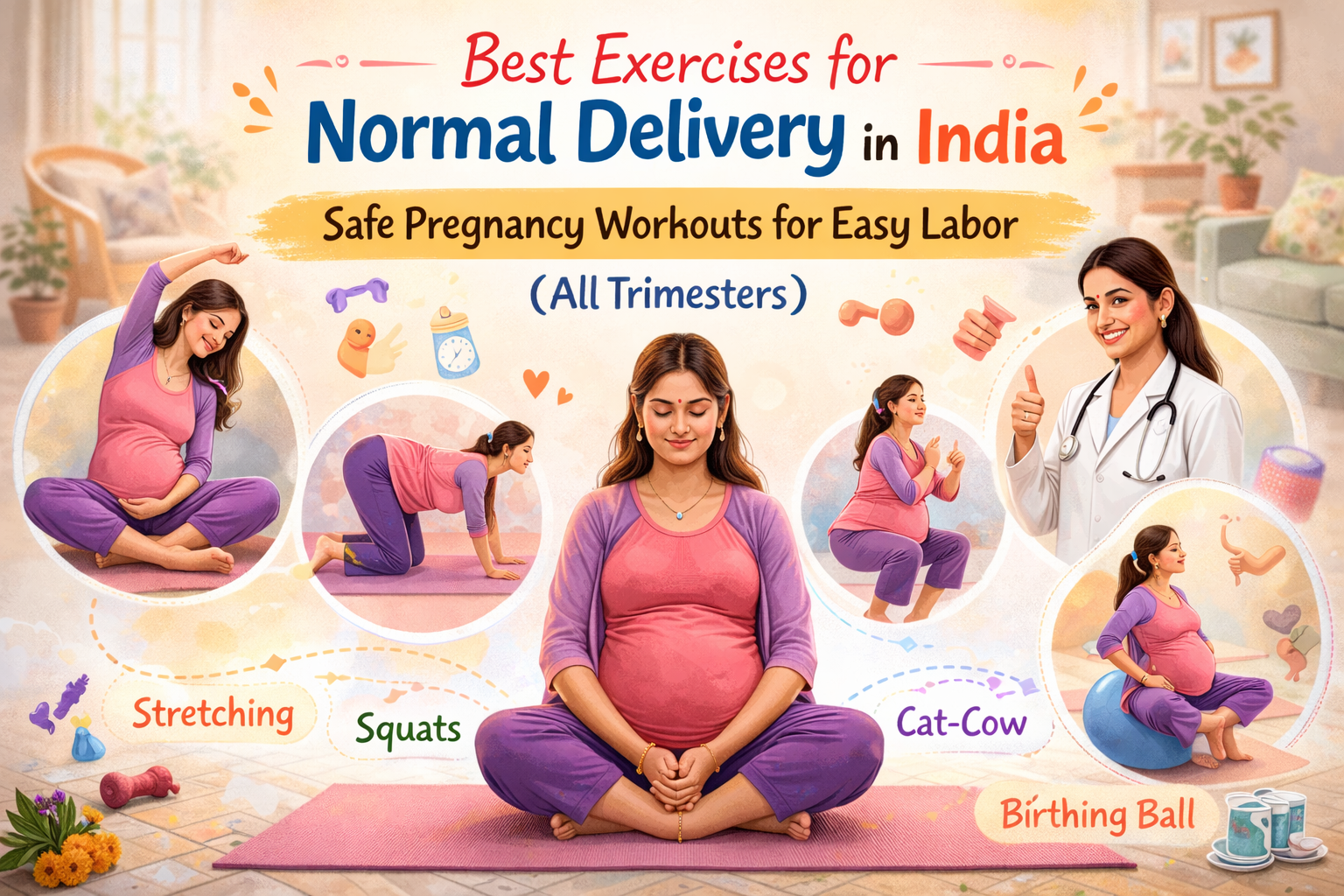

Many Indian moms dream of a smooth, natural (normal) delivery — and the best exercises for normal delivery in India can help strengthen your body, improve stamina, ease labor pain, and speed recovery. The key: gentle, doctor-approved pregnancy workouts that are safe in all trimesters.
Momsaathi.com provides content for informational and educational purposes only. It is not intended to serve as a substitute for professional medical advice, diagnosis, or treatment. Always consult your gynecologist before starting any exercise during pregnancy. Stop immediately if you feel pain, dizziness, shortness of breath, contractions, bleeding, or reduced fetal movement.
Many Indian moms dream of a smooth, natural (normal) delivery — and regular, safe exercise can help strengthen your body, improve stamina, ease labor pain, and speed recovery. The key: gentle, doctor-approved movements that suit all trimesters.
In 2026, gynecologists across India (including Karnataka) recommend low-impact activities like walking, prenatal yoga, pelvic floor exercises, and breathing techniques. These reduce risks like gestational diabetes, back pain, and prolonged labor while preparing your body for pushing.
Below is a list of the best exercises for normal delivery in India — safe for all trimesters when cleared by your doctor — with illustrations in mind, breathing tips, and clear “when to stop” signs.
1. Daily Brisk Walking (Best for All Trimesters)
Why it helps: Improves circulation, controls weight, boosts mood, and strengthens legs/hips for labor. How to do: Walk 20–30 minutes daily at a comfortable pace (talk-test: you should be able to speak full sentences). Trimester tips:
- 1st: Start slow if nauseous.
- 2nd/3rd: Use supportive shoes; walk in parks or indoors. Breathing: Inhale through the nose, exhale through the mouth — keep it natural. When to stop: Dizziness, chest pain, contractions, or swelling. Desi tip: Morning park walk in Karnataka — fresh air + sunlight for vitamin D.
2. Prenatal Yoga Poses (Highly Recommended in India)
Why it helps: Increases flexibility, opens pelvis, strengthens core/pelvic floor, reduces stress. Safe Indian yoga poses (always with prenatal-certified instructor or doctor approval):
- Cat-Cow Pose (Marjaryasana-Bitilasana): On all fours, arch and round back gently. Great for back pain.
- Butterfly Pose (Baddha Konasana): Sit with soles together, knees open — gently flap knees. Opens hips for delivery.
- Squats (Malasana): Wide squat with support (hold chair). Strengthens thighs/pelvis.
- Child’s Pose (Balasana): Knees wide, rest forehead on mat — relaxes lower back.
- Corpse Pose (Savasana): Lie on left side with pillow support — deep relaxation.
Breathing technique: Ujjayi breath (ocean breath) — inhale/exhale through nose with slight throat constriction for calm focus. When to stop: Any strain, dizziness, or lying flat on the back after 16 weeks. Desi tip: Many Karnataka yoga centers offer prenatal classes — join one if possible.
3. Pelvic Floor Exercises (Kegels) – Must-Do for Every Trimester
Why it helps: Strengthens muscles for pushing, prevents incontinence, speeds recovery. How to do: Squeeze pelvic floor muscles (like stopping urine mid-flow) for 5–10 seconds, relax 5–10 seconds. Do 10–15 reps, 3 times/day. Trimester tips: Start early; increase reps in later months. Breathing: Exhale while squeezing, inhale while relaxing. When to stop: Pain or discomfort (rare if done gently). Desi tip: Do Kegels while sitting in traffic or watching TV — easy for busy moms.
4. Deep Squats & Pelvic Tilts (For Pelvic Opening & Back Relief)
Why it helps: Opens the pelvis, relieves lower back pain, and encourages the baby to descend. How to do:
- Pelvic tilts: On all fours or standing against a wall, tilt the pelvis forward/back.
- Deep squats: Hold chair, squat wide (Malasana style), hold 30–60 seconds. Breathing: Inhale to prepare, exhale to tilt/squat. When to stop: Knee/hip pain, instability, or doctor restriction. Desi tip: Practice while watching TV or chatting with family — common in joint homes.
5. Breathing & Relaxation Techniques (Lamaze-Style for Labor)
Why it helps: Reduces fear/pain, conserves energy during contractions. Techniques:
- Slow deep breathing: Inhale 4 counts, exhale 6 counts.
- Patterned breathing: Light, shallow breaths during intense contractions.
- Visualization: Imagine the baby descending with each exhale. Desi tip: Combine with bhramari pranayama (humming bee breath) for calm — safe in pregnancy.
When to Stop Any Exercise During Pregnancy
Immediately stop and call your doctor if you experience:
- Vaginal bleeding
- Dizziness or fainting
- Shortness of breath
- Chest pain or palpitations
- Severe headache
- Reduced fetal movement
- Contractions or leaking fluid
Final Tips for Indian Moms in 2026
- Get clearance from your gynecologist before starting (especially high-risk cases).
- Stay hydrated — sip nimbu paani or coconut water during/after exercise.
- Wear supportive shoes & loose cotton clothes.
- Listen to your body — rest when tired.
- Aim for 150 minutes of moderate activity per week (spread out).
Regular exercise can make labor shorter and recovery faster — you’ve got this!
Which exercise are you trying this week? Share your experience in the comments — let’s motivate each other, Karnataka moms!
Related Articles on Momsaathi.com:
External Resources: