
Momsaathi.com provides content for informational and educational purposes only. It is not intended to serve as a substitute for professional medical advice, diagnosis, or treatment. Always consult your gynecologist or obstetrician for personalized guidance during pregnancy. Never follow myths that could risk your health or your baby’s.
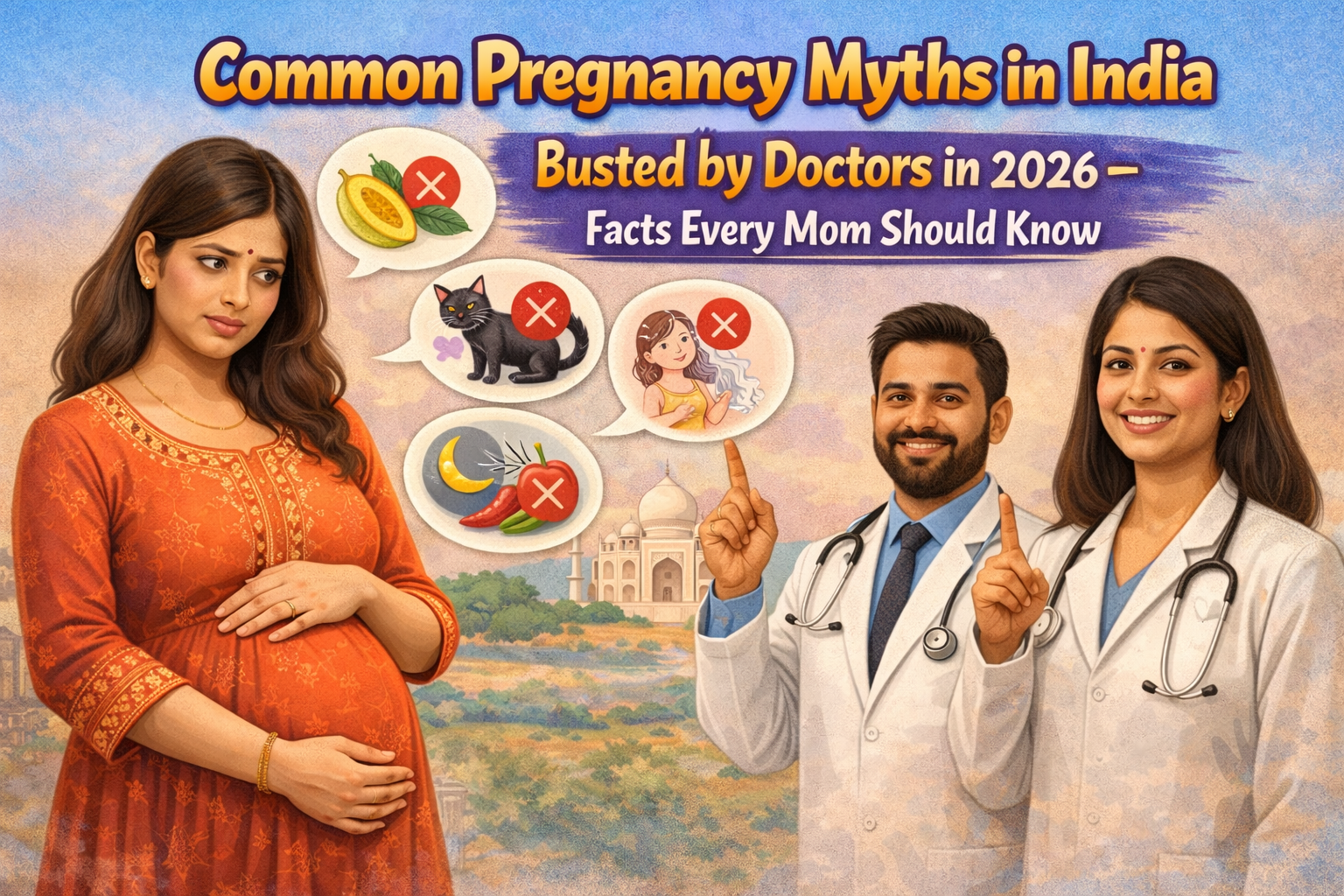
In Indian homes, pregnancy comes with a flood of well-meaning advice from family elders: “Don’t eat papaya,” “No oil massage,” “Stay indoors during eclipse,” or “Eat for two!” While love is behind it, many of these common pregnancy myths India are outdated or even harmful. In 2026, with better access to evidence-based care (like PMSMA specialist visits), it’s time to separate myth from medical fact.
Here are 12 popular pregnancy myths India busted by gynecologists and experts — with clear Myth vs. Fact breakdowns and why they persist in desi families.
Myth 1: Eating Papaya or Pineapple Causes Miscarriage
Myth: Many Indian families warn that papaya (especially green) or pineapple causes “heat” in the body and miscarriage. Fact: Ripe papaya and pineapple in moderation are safe and nutritious (rich in vitamin C, fiber, and enzymes that ease constipation). Only large amounts of unripe papaya contain latex (papain), which can stimulate uterine contractions in theory — but normal ripe consumption poses no risk. Doctor quote: “Ripe papaya is safe and even recommended for digestion during pregnancy,” says Dr. Manjula Anagani, renowned gynecologist (paraphrased from recent expert discussions). Desi tip: Enjoy ripe papaya as a snack — it helps with bloating common in Indian diets.
Myth 2: Pregnant Women Must “Eat for Two” (Double Portions)
Myth: You’re carrying a baby, so double your food intake for strength. Fact: You need only ~300–500 extra calories per day (second/third trimester), focusing on quality — not quantity. Overeating leads to excess weight gain, gestational diabetes risk, and harder delivery. Doctor quote: “Quality nutrition over quantity is key,” notes experts from NHM India guidelines. Desi tip: Stick to balanced thalis with dal, sabzi, curd, and seasonal fruits — no need for extra ghee laddoos every meal!
Myth 3: No Oil Massage or Coconut Oil During Pregnancy
Myth: Oil massage (especially on belly) harms the baby or causes stretch marks permanently. Fact: Gentle oil massage (coconut or sesame) improves circulation, reduces stretch marks, and relaxes muscles — it’s safe and even recommended by many gynecologists if done lightly. Avoid heavy pressure or hot oil. Doctor quote: “Moderate oil massage is beneficial for skin and relaxation,” per recent gynecologist advice. Desi tip: Use warm coconut oil post-bath — a traditional practice that’s safe when gentle.
Myth 4: Pregnant Women Should Avoid All Exercise and Stay in Bed Rest
Myth: Any activity or exercise can cause miscarriage or harm the baby. Fact: Moderate exercise (walking, prenatal yoga, swimming) is encouraged — it boosts mood, controls weight, reduces gestational diabetes risk, and eases labor. Bed rest is only for high-risk cases. Doctor quote: “Safe activity is one of the best things you can do,” says Dr. Preethika Shetty (gynecologist insights). Desi tip: Try 20–30 min daily walks or yoga — many Karnataka moms find it energizing.
Myth 5: Heartburn Means Your Baby Will Have Lots of Hair
Myth: Severe acidity/heartburn predicts a hairy baby. Fact: Heartburn is due to progesterone relaxing the esophageal sphincter — no link to baby’s hair. It’s common but treatable with small meals and avoiding spicy/oily food. Doctor quote: “This is pure folklore — no scientific basis,” experts clarify. Desi tip: Avoid late-night heavy meals; sip fennel (saunf) water.
Myth 6: The Shape of Your Belly Predicts Baby’s Gender
Myth: High bump = girl; low bump = boy (or cravings for sweets vs. salty). Fact: Belly shape depends on muscle tone, baby position, and uterine growth — not gender. Only ultrasound or NIPT confirms. Doctor quote: “Belly shape has zero relation to gender,” per multiple gynecologists.
Myth 7: Pregnant Women Should Not Drink Water After Sunset or in Evening
Myth: Evening water causes swelling or harms baby. Fact: Hydration is crucial (8–10 glasses/day) — dehydration worsens swelling, constipation, and fatigue. Drink freely unless doctor restricts. Desi tip: Sip nimbu paani or coconut water anytime.
Myth 8: Avoid All Cold Foods (Curd, Buttermilk, Ice Cream)
Myth: Cold foods cause cough/cold in baby or miscarriage. Fact: Pasteurized curd/buttermilk are excellent calcium sources — safe and recommended. No evidence links them to harm. Doctor quote: “Dairy is essential for bone development,” ICMR guidelines confirm.
Myth 9: Pregnant Women Should Not Attend Weddings or Auspicious Events
Myth: “Evil eye” (nazar) or crowds harm the baby. Fact: No scientific basis — enjoy social events in moderation for mental health. Desi tip: Stay hydrated and rest if tired — crowds don’t cause issues.
Myth 10: Spicy Food Harms the Baby or Causes Dark Skin
Myth: “Hot” foods like chili burn the baby or darken skin. Fact: Moderate spice is fine — no effect on baby’s skin color (genetic). Avoid excess if it causes acidity.
Myth 11: Stay Indoors During Solar Eclipse to Avoid Birth Defects
Myth: Eclipse causes defects or miscarriage. Fact: No scientific link — eclipses are astronomical events with no biological impact on pregnancy. Doctor quote: “No evidence of harm from eclipses,” WHO-aligned experts confirm.
Myth 12: Pregnant Women Should Not Cut Hair or Nails
Myth: Cutting hair/nails shortens baby’s life or causes weakness. Fact: Pure superstition — grooming is safe and boosts mood/self-care.
Final Words for Indian Moms in 2026
Pregnancy myths India often come from love and tradition, but blindly following them can cause unnecessary worry or harm. In 2026, trust science, your gynecologist, and evidence-based care (like PMSMA visits). You’ve got this — focus on joy, nutrition, and rest!
Which pregnancy myth did your family tell you? Share in the comments — let’s bust more together, Karnataka moms!
Related Articles on Momsaathi.com:
- Pregnancy Tips India 2026
- High Risk Pregnancy Tips India 2026
- Foods to Eat During Pregnancy in India
External Resources: