
Momsaathi.com provides content for informational and educational purposes only. It is not intended to serve as a substitute for professional medical advice, diagnosis, or treatment. Always consult your obstetrician, gynecologist, or maternal-fetal medicine specialist immediately for personalized guidance on high-risk pregnancy. Never ignore symptoms — seek urgent care if needed.
A high-risk pregnancy means extra monitoring is needed due to factors that could affect mom or baby — but with proper care, most result in healthy outcomes. In India in 2026, nearly half of pregnancies involve some risk (e.g., anemia, hypertension, gestational diabetes, multiples, advanced/teenage maternal age, or pre-existing conditions like thyroid issues). Government programs like Pradhan Mantri Surakshit Matritva Abhiyan (PMSMA) offer free specialist check-ups on the 9th of every month, making expert care more accessible.
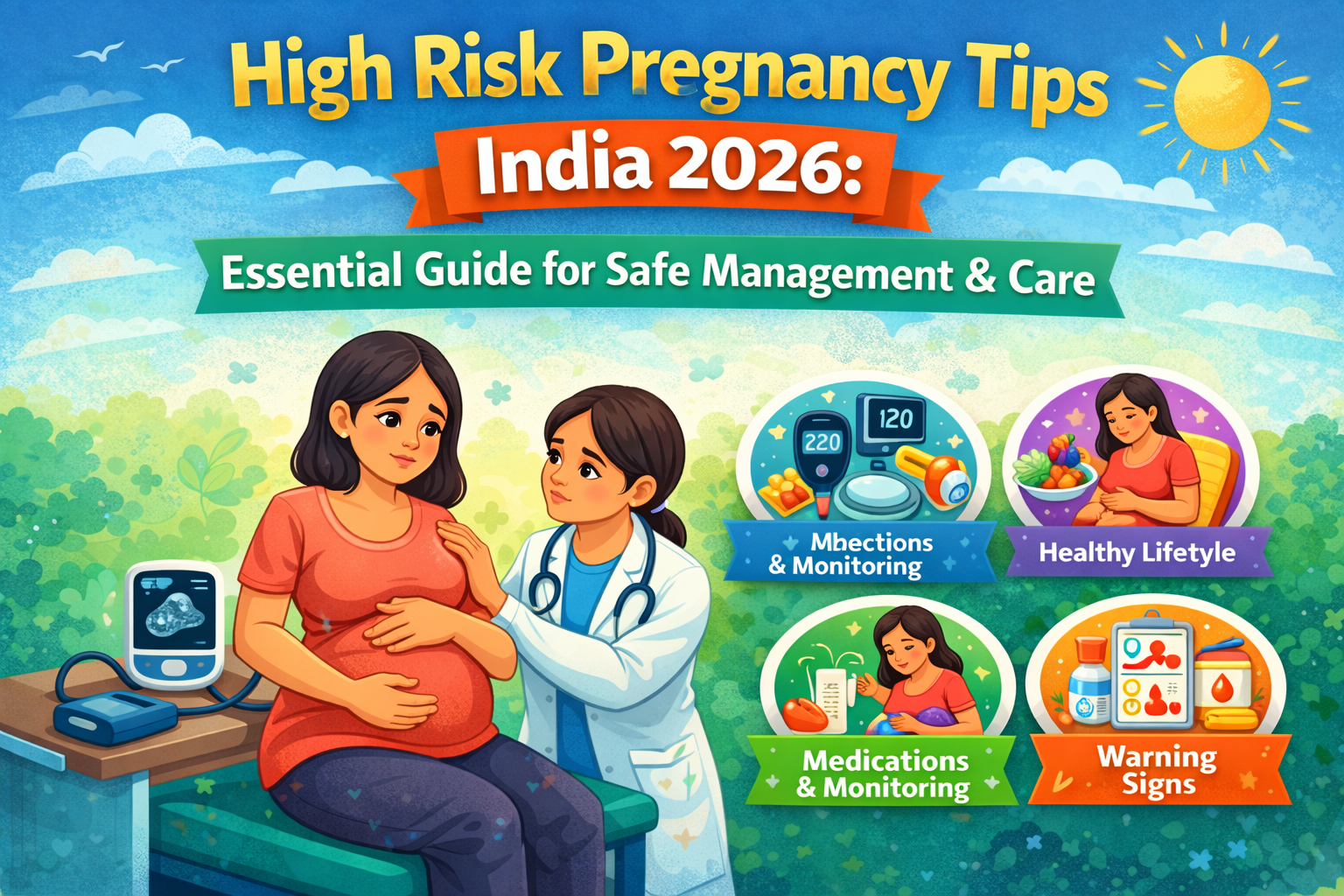
High-risk doesn’t mean fear — it means proactive steps for safety. Here’s a practical guide with essential high-risk pregnancy tips for India 2026 to help you navigate confidently.
1. Prioritize Frequent & Specialized Prenatal Check-Ups
Regular monitoring is the #1 way to catch issues early.
- Attend every scheduled appointment — often more frequent (every 1–2 weeks in later trimesters).
- Use PMSMA camps for free specialist consultations (OB-GYNs check blood pressure, sugar, anemia, fetal growth).
- Expect more tests: Ultrasounds, Doppler for blood flow, non-stress tests, blood work (sugar, thyroid, hemoglobin), fetal monitoring.
- Track at home: Daily blood pressure/sugar if advised, count fetal movements (10 movements in 2 hours after meals — report drops immediately).
For Karnataka moms: Many government hospitals and private clinics in Bengaluru offer high-risk units — book early.
2. Follow a Nutrient-Rich, Balanced Diet Tailored to Your Needs
Nutrition combats common risks like anemia (very prevalent in India) and gestational diabetes.
- Iron-rich foods (for anemia): Jaggery, dates, spinach (palak), beetroot, ragi, lentils (dal), pomegranate — pair with vitamin C (lemon/nimbu) for absorption.
- Protein & calcium: Paneer, curd, milk, eggs, dals, nuts — support baby growth and prevent low birth weight.
- Controlled carbs (if diabetic risk): Small, frequent meals with whole grains (brown rice, millets), veggies, and avoid excess sweets/junk.
- Prenatal vitamins/supplements: Take folic acid, iron, and calcium as prescribed — never skip.
- Hydrate well: 8–10 glasses of water + coconut water/nimbu paani to maintain amniotic fluid.
Avoid: Raw/undercooked foods, unpasteurized dairy, excessive salt/caffeine. Home-cooked desi meals are best.
3. Manage Rest, Stress & Safe Activity Levels
Rest is medicine, but complete bed rest is only if the doctor advises.
- Rest smartly: Elevate legs to reduce swelling, sleep on left side for better blood flow, aim for 7–9 hours nightly + short naps.
- Gentle movement: Doctor-approved walking, prenatal yoga (focus on breathing/pelvic floor), or light stretches — improves circulation, mood, and controls weight/BP.
- Stress reduction: Meditation, deep breathing, light music, family support — high stress worsens risks like preeclampsia.
- Avoid: Heavy lifting, strenuous work, long standing, travel in later stages without clearance.
In joint families: Accept help for chores — prioritize your health.
4. Monitor & Respond to Warning Signs Promptly
Know red flags — act fast to prevent complications like preterm labor or preeclampsia.
- Severe headache, vision changes, upper abdominal pain, swelling (hands/face), high BP — could be preeclampsia.
- Bleeding, severe cramps, leaking fluid, reduced fetal movements — immediate hospital visit.
- Fever, persistent vomiting, and signs of infection.
- For diabetes/hypertension: Track levels daily if advised.
Tip: Keep emergency contacts (doctor, hospital, ambulance) handy. In India, call 108/102 for free transport.
5. Emotional & Mental Health Support – You’re Not Alone
High-risk can bring anxiety — address it.
- Talk openly: Share worries with partner/family/doctor.
- Join support groups (online or hospital-based for high-risk moms.
- Practice self-care: Hobbies, short walks, positive affirmations.
- If sadness persists: Seek counseling — maternal mental health is key.
Many moms share: “Closer monitoring gave me peace — baby arrived healthy!”
Bonus: Pre-Pregnancy Steps to Lower Risks (If Planning Future)
- Manage chronic conditions (diabetes, BP, thyroid).
- Achieve a healthy weight/BMI.
- Folic acid starts 3 months before.
- Quit smoking/alcohol/tobacco.
Your High-Risk Pregnancy Mantra 2026
Follow your doctor’s plan, listen to your body, and seek support early. With India’s improving care (PMSMA, SUMAN schemes), outcomes are better than ever.
What’s one tip helping you right now? Share in comments — Karnataka moms, let’s support each other!
Resources:
- Internal: Link to pregnancy tips India 2026 for general prep.
- External: PMSMA info — https://pmsma.mohfw.gov.in/; Max Healthcare high-risk guide — https://www.maxhealthcare.in/blogs/how-deal-high-risk-pregnancy.
FAQ’s on High Risk Pregnancy in India
What makes a pregnancy high-risk?
A pregnancy is considered high-risk when the mother or baby has medical conditions that increase the chance of complications.
Can a high-risk pregnancy result in a healthy delivery?
Yes, with proper medical monitoring and early intervention, many women with high-risk pregnancies have healthy deliveries.
How often are checkups needed in a high-risk pregnancy?
Doctors may recommend more frequent visits, sometimes every 1–2 weeks, depending on the condition.
What warning signs should not be ignored?
Severe headaches, bleeding, high blood pressure symptoms, and reduced baby movement require immediate medical attention.
A pregnancy is considered high-risk when the mother or baby has medical conditions that increase the chance of complications.
Yes, with proper medical monitoring and early intervention, many women with high-risk pregnancies have healthy deliveries.
Doctors may recommend more frequent visits, sometimes every 1–2 weeks, depending on the condition.
Severe headaches, bleeding, high blood pressure symptoms, and reduced baby movement require immediate medical attention.

[…] You can also read our detailed High Risk Pregnancy Tips India 2026 guide for specialised care advice… […]