
Momsaathi.com provides content for informational and educational purposes only. It is not intended to serve as a substitute for professional medical advice, diagnosis, or treatment. If you have severe abdominal pain, fever, vomiting, or jaundice, contact your doctor or go to the hospital immediately.
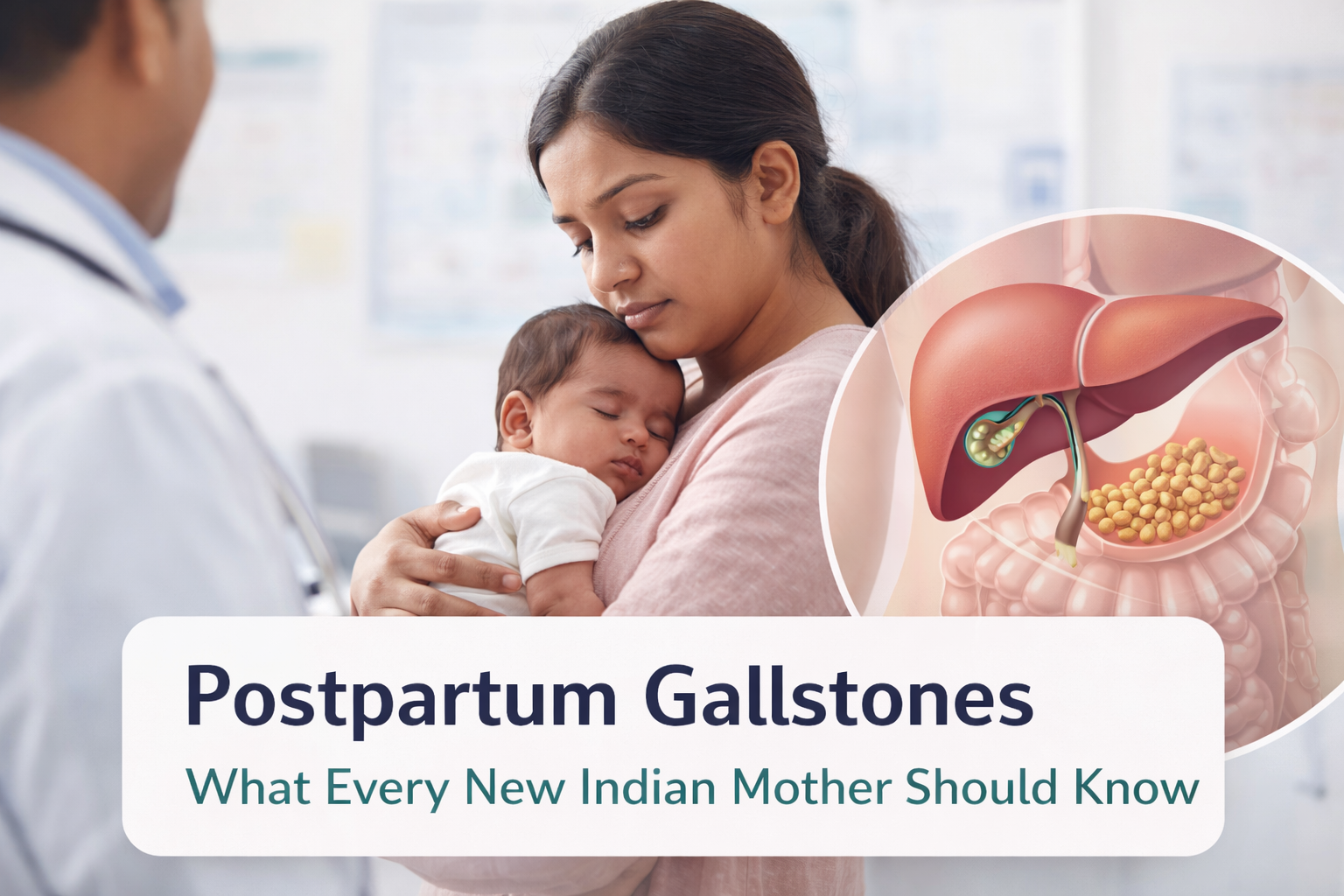
Many new Indian mothers experience unexpected pain in the upper right abdomen or under the ribs weeks or months after delivery. One common cause: postpartum gallstones.
Gallstones after pregnancy are surprisingly frequent — pregnancy increases the risk 2–3 times. In India, factors like rapid weight changes, high-fat desi meals (ghee-heavy sweets, fried snacks), and genetics make it even more common.
This guide explains why postpartum gallstones happen, key symptoms, safe diet tips for Indian moms, and when to seek help — so you can protect your health while caring for your baby.
Why Gallstones Are Common After Delivery
During pregnancy, your body makes extra cholesterol and bile, but the gallbladder empties more slowly (due to progesterone). This creates sludge or stones. After delivery, rapid weight loss (common in the first 3–6 months) can also trigger stones to move and block ducts.
Common Indian triggers:
- Sudden weight loss after birth
- High-fat postpartum diet (laddoos, halwa, ghee-rich curries)
- Dehydration (not drinking enough water in early motherhood)
- Family history (gallstones run in families)
Key Symptoms of Postpartum Gallstones
Watch for these signs — especially 2 weeks to 6 months after delivery:
- Sudden sharp pain in upper right abdomen or under right ribs (can last minutes to hours)
- Pain after fatty meals (paratha, biryani, sweets)
- Nausea or vomiting
- Pain that radiates to right shoulder or back
- Bloating, indigestion, or gas
- Fever, chills, or jaundice (yellow skin/eyes) → emergency
Note: Many moms mistake it for gas, acidity, or postpartum weakness — don’t ignore recurring pain.
Safe Diet Tips for Indian Moms (Gallstone-Friendly)
You don’t need to give up desi food — just adjust.
Foods to Eat More
- High-fiber: Oats, ragi porridge, dal, whole grains, fruits (papaya, guava, apple)
- Low-fat protein: Moong dal, boiled chana, paneer (small amounts), curd
- Healthy fats: Small amounts of ghee, nuts, seeds (flaxseeds/alsi)
- Hydration: 3–4 liters water + coconut water, jeera water, buttermilk
Foods to Limit or Avoid (Especially After Pain Episode)
- Deep-fried snacks (pakoda, samosa, vada)
- High-fat sweets (gulab jamun, jalebi, halwa)
- Rich gravies (butter chicken, paneer butter masala)
- Full-fat dairy in large amounts
- Spicy/oily street food
Desi-friendly meal ideas:
- Breakfast: Ragi porridge + fruit + curd
- Lunch: Roti + moong dal + lauki sabzi + salad
- Snack: Roasted chana or boiled egg + buttermilk
- Dinner: Khichdi with veggies + raita
When to See a Doctor Immediately
Go to hospital/consult surgeon if:
- Severe pain lasting >2–3 hours
- Fever + chills
- Vomiting that won’t stop
- Yellow skin/eyes (jaundice)
- Pain + dark urine or pale stools
In India: Many government hospitals offer low-cost ultrasound & surgery (laparoscopic cholecystectomy). Private options (Cloudnine, Manipal, Fortis) are faster for working moms.
Final Words for New Indian Moms
Postpartum gallstones are common but manageable. Listen to your body, eat lighter desi meals, stay hydrated, and don’t ignore recurring pain. Most moms recover fully with timely care.
Have you or someone you know experienced gallstones after delivery? Share your story or tip in the comments — let’s support each other, Karnataka moms!
Related Articles on Momsaathi.com:
External Resources: