
Momsaathi.com provides content for informational and educational purposes only. It is not intended to serve as a substitute for professional medical advice, diagnosis, or treatment. Always consult a child psychologist, counselor, or pediatrician if your child shows signs of anxiety, depression, aggression, social withdrawal, or any mental health concerns.
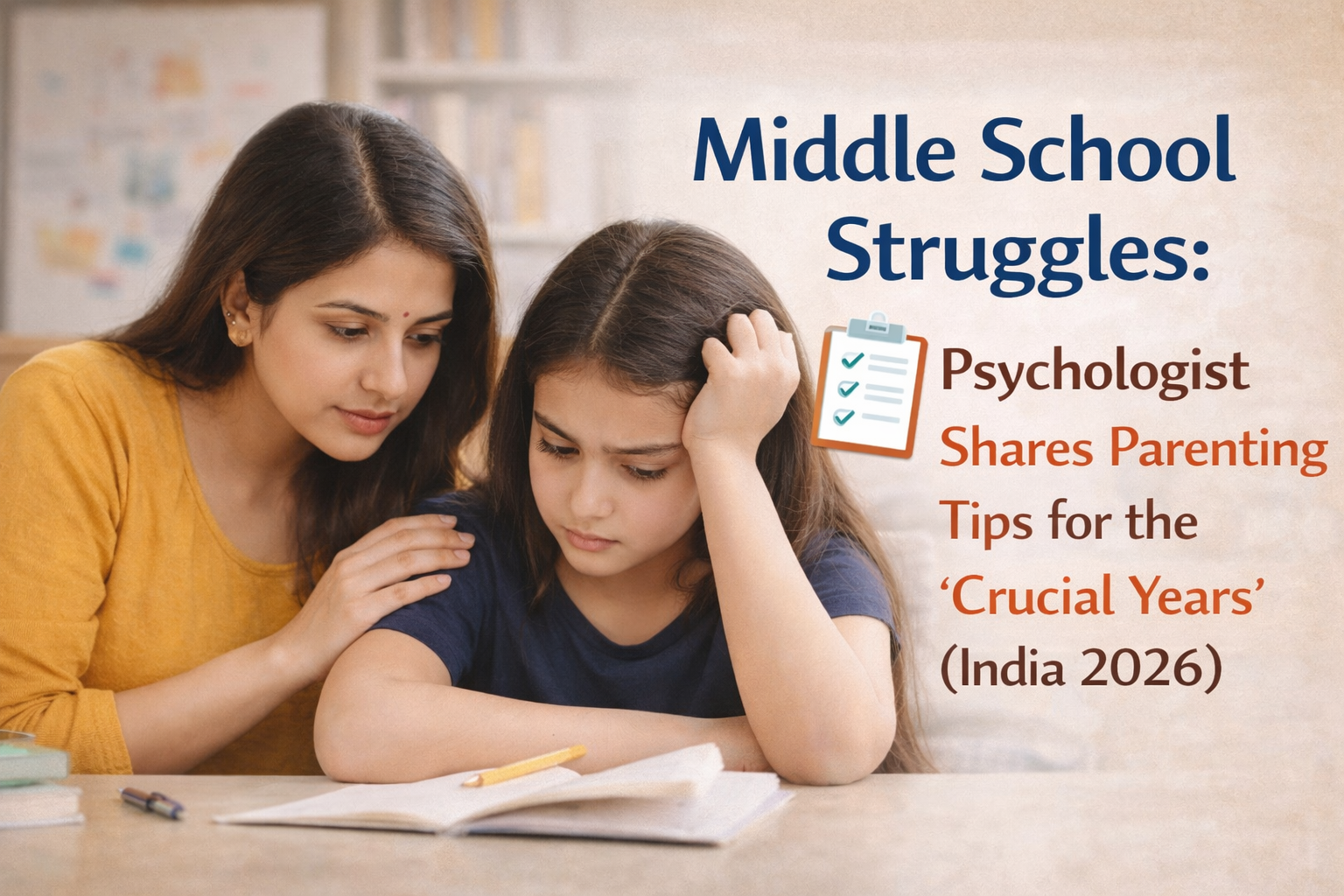
Middle school (classes 6–8, ages 11–14) is often called the “crucial years” — and for good reason. In 2026, Indian parents are seeing more intense struggles: heavy school pressure, phone/social media addiction, peer comparison, identity questions, mood swings, and the sudden shift from “child” to “teen”.
Psychologists working with Indian families (especially in urban Karnataka and metro cities) say these years are make-or-break for emotional health, self-esteem, and academic motivation. The good news? With mindful parenting, most children come out stronger and more resilient.
Here are practical, psychologist-backed middle school parenting tips India that many families are using successfully in 2026.
1. Understand What’s Really Happening in Their Brain & Body
Middle school is puberty + prefrontal cortex remodelling. That means:
- Emotions are intense and unpredictable
- Impulse control is still developing
- Peer approval feels more important than parents’
- They crave independence but still need guidance
Tip: Remind yourself daily: “This is biology, not bad behaviour.” It reduces anger and helps you respond calmly.
2. Replace Lectures with Listening & Curiosity
Lectures and “you should” statements usually shut teens down. Instead, psychologists recommend curiosity-based conversations.
Phrases that work better:
- “What’s been the hardest part of school this week?”
- “How did that fight with your friend make you feel?”
- “What do you think would happen if you tried…?”
Indian mom hack: Start talks during late-night chai or car rides — less eye contact = less pressure.
3. Set Firm but Fair Screen & Phone Boundaries
Phone addiction peaks in middle school. In 2026, Indian teens average 4–6 hours/day on screens (Instagram, YouTube Shorts, Free Fire).
Realistic boundaries:
- No phones in bedroom after 9 PM (charge in living room)
- Screen time 1–1.5 hours/day on weekdays (after homework)
- Family “no-phone” zones (meals, study time)
- Use apps like Google Family Link or Apple Screen Time together — make it collaborative
Tip: Explain the “why” — “Screens affect sleep and focus, which affects your marks and mood.”
4. Help Them Handle School Pressure & Peer Comparison
CBSE/ICSE/State board pressure + social media comparisons create anxiety and low self-worth.
What works:
- Focus on effort & progress (“I see how hard you studied”) not marks
- Teach growth mindset: “You’re not bad at math — you’re still learning it”
- Celebrate non-academic wins (sports, art, kindness)
- Limit social media exposure (private accounts, no reels before bed)
Desi tip: Many Karnataka families use “family study time” — everyone studies/reads together 45 min/day — reduces isolation.
5. Teach Emotional Regulation & Problem-Solving
Middle schoolers feel everything 10× more intensely.
Simple tools:
- 4-7-8 breathing (inhale 4, hold 7, exhale 8)
- “Name it to tame it” — “You seem angry — want to talk about it?”
- Problem-solving steps: “What happened? How do you feel? What can we try?”
Tip: Model it yourself — when you’re upset, say “I’m feeling frustrated, so I’m taking 5 deep breaths.”
6. Protect Sleep & Nutrition (Often Overlooked)
Sleep deprivation + junk food = worse mood, focus, and immunity.
2026 Indian parent checklist:
- Bedtime 9:30–10 PM (10–11 hours sleep needed)
- No screens 60 min before bed
- Dinner by 8 PM (light: roti-sabzi, curd rice)
- Limit packaged snacks — prefer fruits, nuts, boiled egg
When to Seek Professional Help (Don’t Wait)
Contact a child psychologist or counselor if you see:
- Persistent sadness, withdrawal, or loss of interest
- Extreme irritability or anger outbursts
- Refusing school or activities they used to love
- Self-harm talk or risky behaviour
- Sudden drop in marks + sleep/eating changes
In India (2026): Many schools now have counselors. Government options include NIMHANS (Bengaluru), RBSK camps, or tele-counseling via 104/108 helplines.
Final Words for Indian Moms & Dads
Middle school is tough — for kids and parents. But with empathy, clear boundaries, open communication, and self-care, most families come out stronger.
You’re not failing — you’re guiding a human through one of the hardest phases of growth.
Which middle school struggle are you facing right now? Share in the comments — let’s support each other, Karnataka parents!
Related Articles on Momsaathi.com:
External Resources: