
The first 30 days with a newborn are intense, beautiful, and often exhausting—especially as a new mom in India, where family involvement, traditional practices (like jaappa or the 40-day confinement), and modern medical advice all mix together. This realistic survival guide focuses on what actually happens, not idealized Instagram versions. It’s about surviving and thriving, prioritizing your recovery, the baby’s health, and your sanity amid well-meaning family advice, sleep deprivation, and hormonal shifts.
1. Your Body After Delivery: Be Kind to Yourself
Your body just did something massive. Recovery takes time—longer after a C-section.
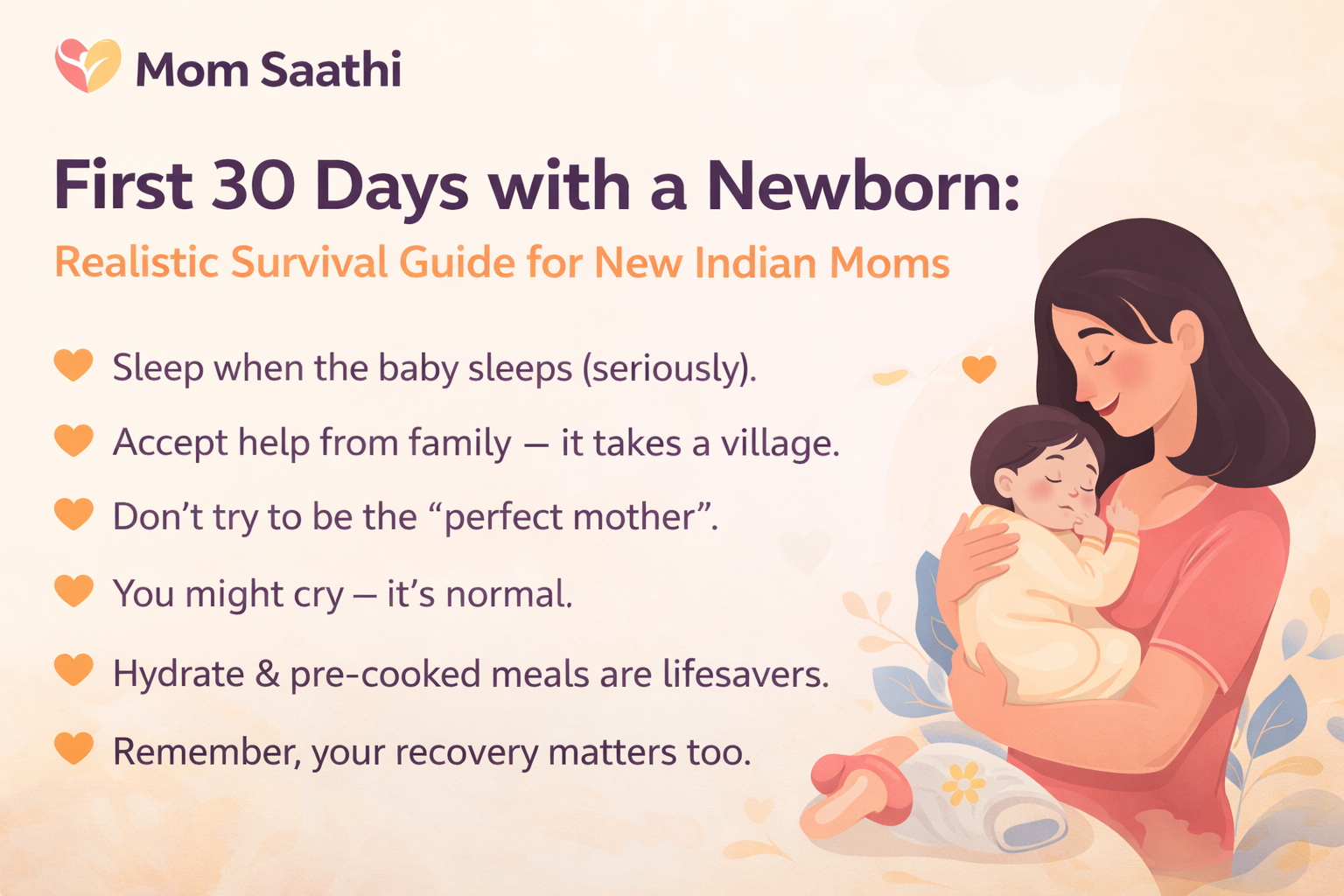
- Rest is non-negotiable — In many Indian homes, the “40-day rule” (or jaappa) means limited visitors, no heavy work, and family help with chores. Embrace it if possible. Sleep when the baby sleeps, even if it’s just 20-minute naps.
- Pain and bleeding — Lochia (postpartum bleeding) lasts 4–6 weeks, heaviest first week. Use maternity pads. For C-section moms: keep the incision clean/dry, watch for redness/swelling.
- Nutrition and hydration — Eat nutrient-rich, warm foods (traditional postpartum meals like dal, ghee-laden khichdi, methi laddoos, or ajwain water help lactation and digestion). Drink plenty of water, jeera water, or lactation teas. Avoid very spicy/oily if it upsets your stomach.
- Emotional rollercoaster — Baby blues hit 70–80% of moms (crying, anxiety, overwhelm). It usually passes in 2 weeks. If it worsens (sadness, guilt, detachment), talk to a doctor—postpartum depression is real and treatable.
- Self-care basics — Gentle walks, pelvic floor exercises (Kegels), and short warm baths. Ask family for help so you can rest.
2. Feeding Your Newborn: The Real Deal
Newborns feed every 2–3 hours (8–12 times/24 hours), including nights. It’s cluster feeding (non-stop evenings) that’s normal.
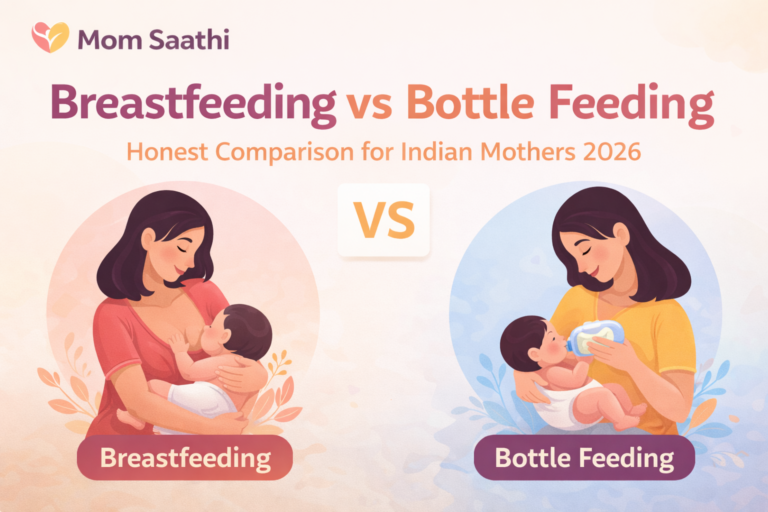
- Breastfeeding — Exclusive for 6 months (WHO/Indian pediatric guidelines). Colostrum (first milk) is gold—give it all. Latch can be tricky; get help from a lactation consultant or hospital nurse early. Sore nipples? Use lanolin cream.
- Signs baby is getting enough — 6+ wet diapers/day after day 4–5, steady weight gain (regains birth weight by ~10–14 days), content after feeds.
- Formula if needed — No shame; consult a pediatrician. Avoid cow’s milk/honey/jaggery water (traditional prelacteals)—they risk infection/allergies.
- Burping — Always burp midway and after to reduce spit-up/gas.
3. Sleep (or Lack of It): What to Expect
Newborns sleep 14–17 hours/day in 2–4 hour chunks. No “schedule” yet—it’s survival mode.
- Safe sleep — Back sleeping in a separate crib/bassinet in your room (reduces SIDS risk). Firm mattress, no pillows/blankets/toys. In Indian homes, avoid co-sleeping on adult beds if possible.
- Day-night confusion — Common; keep days brighter/noisy, nights dim/quiet.
- Swaddling — Helps (use light muslin cloth), but stop if baby shows rolling signs.
4. Daily Care Basics: Keep It Simple and Safe
- Diapers — Change often (8–10/day). Clean with water/wipes; apply rash cream if needed. Track wet/poopy diapers to ensure feeding is good.
- Umbilical cord care — Keep dry/clean. No need for oil/alcohol/turmeric unless doctor advises. Falls off in 7–14 days.
- Bathing — Sponge baths until cord falls, then 2–3 times/week with lukewarm water and mild baby soap. Oil massage (gentle, with baby oil/coconut oil) is traditional and soothing—many Indian families do daily—but keep it light to avoid skin issues.
- Skin and eyes — Vernix (white coating) absorbs naturally. Avoid kajal in eyes (infection risk). No ear/nose drops unless prescribed.
- Temperature — Keep room 24–26°C. Dress in layers (cotton in most Indian climates). No direct sun exposure for long.
5. Family Dynamics and Traditional Practices in India
Indian families often rally around new moms—grandma/aunties help with food, baby holding, and advice. It can be supportive but overwhelming.
- Well-meaning advice — Everyone has opinions (oil in ears, gripe water, head shaving). Politely thank them but follow pediatrician/WHO guidelines. Harmful traditional practices (e.g., applying ash/soot on cord, prelacteals, blowing in nose) can cause infections—skip them.
- Boundaries — It’s okay to say “Doctor advised this” or limit visitors if you’re exhausted. Your recovery comes first.
- Help — Accept it! Let family cook/clean so you bond/feed/rest.
6. When to Call the Doctor Immediately (Red Flags)
Don’t wait—Indian summers/monsoons can make infections rise fast.
- Baby: Fever >38°C, lethargy, poor feeding, fewer than 6 wet diapers/day, yellow skin/eyes (jaundice—common but needs checking), breathing issues, constant crying.
- You: Heavy bleeding (soaking pad/hour), fever, severe pain, signs of depression.
Realistic Expectations
- You’ll feel like you’re failing some days—that’s normal.
- It’s okay if the house isn’t spotless or meals aren’t gourmet.
- The first month is hardest; things ease around weeks 6–8.
- Celebrate small wins: a good feed, a smile, a nap.
You’re not alone—millions of Indian moms have survived this blur. Lean on your partner, family, pediatrician, or online mom communities. You’ve got this—one feed, one nap at a time. 💕
If you have specific concerns (e.g., C-section recovery or breastfeeding struggles), share more for tailored tips!