Pregnancy is a time when your body needs extra care, nutrients, and balanced meals to support both the mother and the growing baby. A healthy pregnancy diet ensures proper fetal development, boosts the mother’s immunity, and helps maintain energy levels throughout the nine months.
A well-planned pregnancy diet chart includes proteins, iron, calcium, folic acid, healthy fats, and fiber. The goal is not to eat more but to eat nutritious foods at the right time of the day.
This guide from Momsaathi provides a simple trimester-wise diet chart for pregnant women, along with foods to include and avoid.
Why Nutrition Is Important During Pregnancy
During pregnancy, the baby receives all nutrients from the mother. Therefore, maintaining a healthy diet becomes extremely important.
According to global pregnancy nutrition recommendations, expecting mothers should consume a diet rich in vitamins, minerals, protein, and fiber to support fetal growth and maternal health.
(Reference: https://www.who.int/news-room/fact-sheets/detail/healthy-diet)
Benefits of a healthy pregnancy diet include:
• Supports baby’s brain development
• Helps build strong bones and muscles
• Maintains healthy birth weight
• Reduces pregnancy complications
• Improves the mother’s energy levels

During pregnancy, the baby depends completely on the mother for nutrition. A balanced diet helps with:
• Healthy brain development of the baby
• Strong bones and teeth formation
• Maintaining healthy birth weight
• Reducing pregnancy complications
• Supporting the mother’s energy and immunity
Doctors usually recommend increasing intake of folic acid, iron, calcium, protein, and omega-3 fatty acids during pregnancy.
Following a pregnancy diet chart helps mothers maintain energy levels and support the baby’s development.
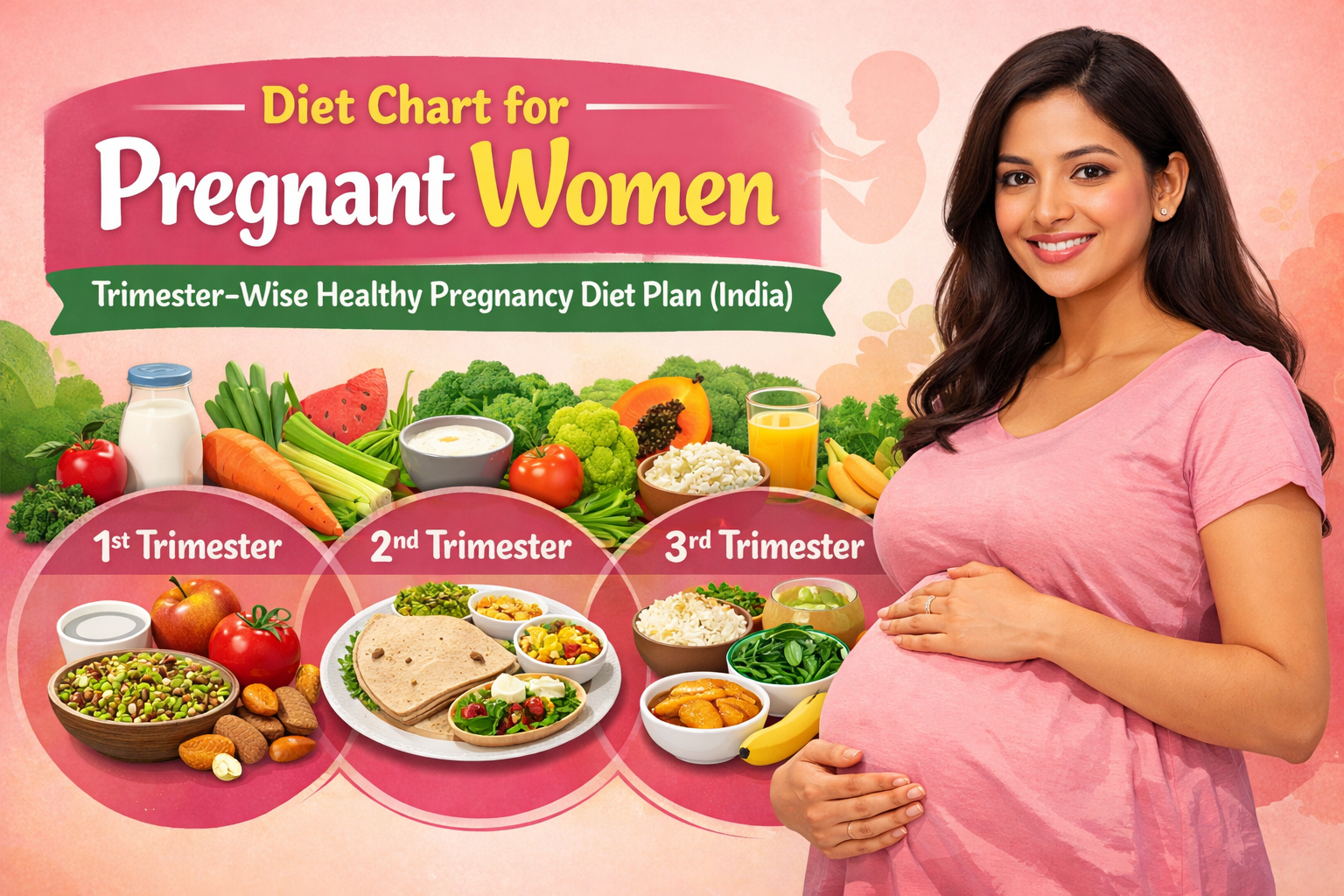
Trimester-Wise Pregnancy Diet Chart
Different stages of pregnancy require slightly different nutrients.
First Trimester Diet Chart (0–3 Months)
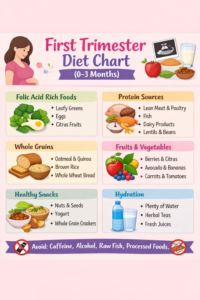
The first trimester focuses on folic acid and light nutritious foods, especially because many women experience nausea and morning sickness.
Early Morning
Warm water with lemon or soaked almonds
Breakfast
Vegetable poha / oats / whole wheat toast with peanut butter
Milk or fresh fruit smoothie
Mid-Morning Snack
Seasonal fruits (banana, apple, orange)
Lunch
Chapati or brown rice
Dal or paneer curry
Green vegetables
Curd
Evening Snack
Roasted makhana / sprouts / nuts
Dinner
Chapati with vegetable curry
Dal or grilled paneer
Bedtime
Warm milk
Important nutrients:
Folic acid, vitamin B6, iron
Second Trimester Diet Chart (4–6 Months)

During the second trimester, the baby’s growth accelerates. The focus should be on protein, calcium, and iron-rich foods.
Early Morning
Soaked almonds and walnuts
Breakfast
Vegetable upma / paratha with curd
Milk or fresh juice
Mid-Morning
Fruit bowl or coconut water
Lunch
2 chapatis or brown rice
Dal or rajma
Green vegetables
Salad
Curd
Evening Snack
Fruit smoothie or boiled corn
Dinner
Chapati with paneer or tofu curry
Vegetable soup
Bedtime
Milk with turmeric
Important nutrients:
Iron, calcium, protein
Third Trimester Diet Chart (7–9 Months)

The third trimester focuses on energy, protein, and fiber to support the baby’s final growth phase.
Early Morning
Warm water with soaked raisins
Breakfast
Vegetable oats / dosa with chutney
Milk
Mid-Morning
Fruit bowl or yogurt
Lunch
Chapati with dal
Paneer or chicken curry
Vegetables
Salad
Evening Snack
Nuts, roasted chana, or fruit smoothie
Dinner
Vegetable soup with chapati
Light protein source like paneer or lentils
Bedtime
Warm milk
Important nutrients:
Protein, calcium, fiber
Foods Pregnant Women Should Include
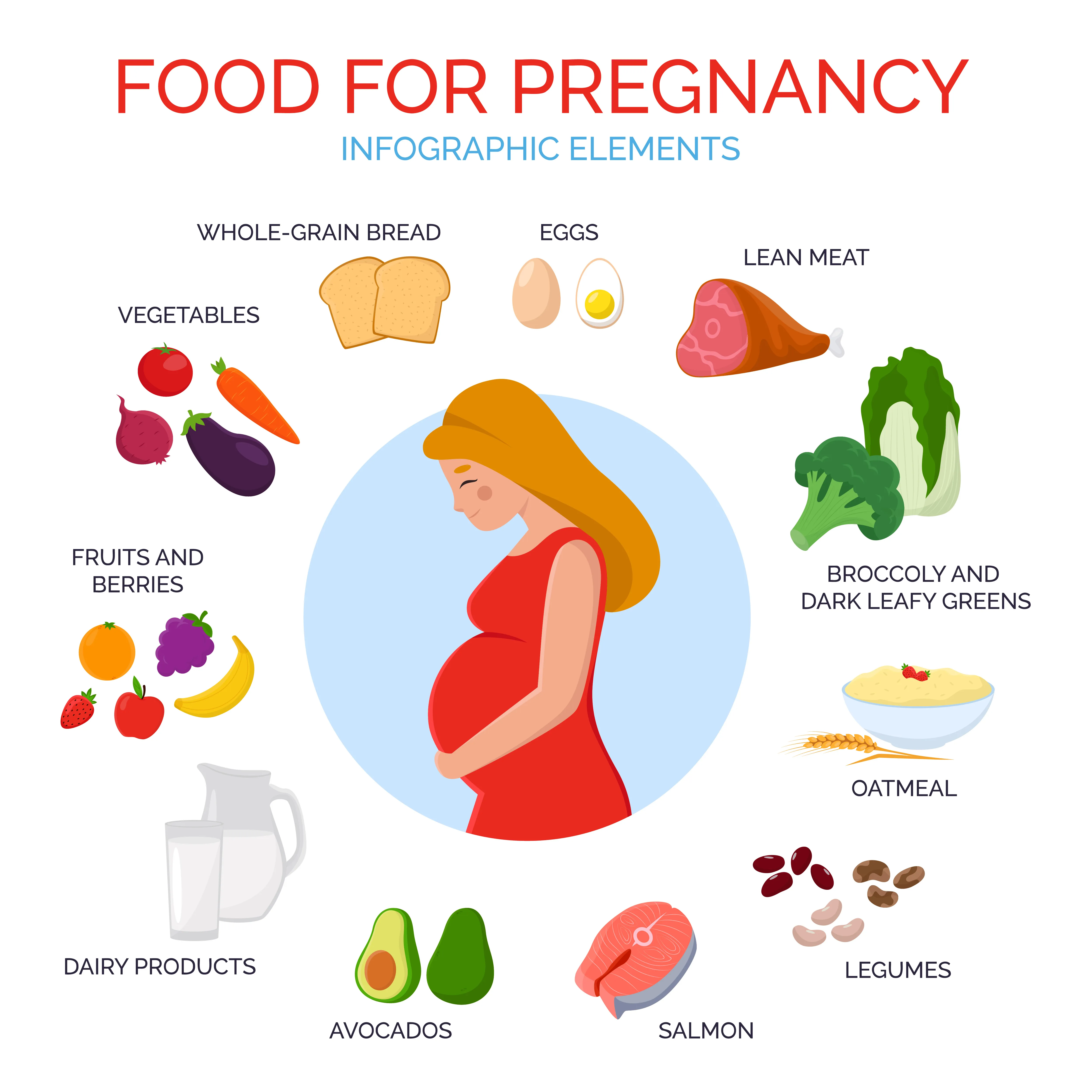
Include these foods regularly in your pregnancy diet:
• Fresh fruits and vegetables
• Whole grains (oats, brown rice, whole wheat)
• Dairy products (milk, yogurt, paneer)
• Protein sources (eggs, lentils, beans, tofu)
• Nuts and seeds
• Iron-rich foods like spinach and dates
Foods to Avoid During Pregnancy
Certain foods may increase the risk of infection or complications.
Avoid the following foods:
• Raw or undercooked meat
• Unpasteurized dairy products
• High-mercury fish
• Alcohol and smoking
• Excess caffeine
• Processed and junk foods
Experts also recommend following healthy eating during pregnancy guidelines to reduce foodborne risks.
Reference: https://www.nhs.uk/pregnancy/keeping-well/foods-to-avoid/
You should also understand the foods to avoid during pregnancy to ensure a safe and healthy pregnancy.
Healthy Pregnancy Diet Tips
• Eat small meals every 2–3 hours
• Drink plenty of water
• Include protein in every meal
• Avoid skipping meals
• Limit caffeine intake
• Take prenatal vitamins recommended by your doctor
Medical experts emphasize the importance of proper pregnancy nutrition guidelines for healthy fetal development.
Reference: https://www.mayoclinic.org/healthy-lifestyle/pregnancy-week-by-week/in-depth/pregnancy-nutrition/art-20045082
Conclusion
A balanced diet plays a crucial role in ensuring a healthy pregnancy for both mother and baby. Following a trimester-wise diet chart for pregnant women helps provide essential nutrients required for fetal growth and maternal health.
You can also explore our pregnancy month by month guide to better understand how your baby grows throughout the pregnancy journey.
Remember that every pregnancy is different, so always consult your doctor or nutritionist before making major dietary changes.