
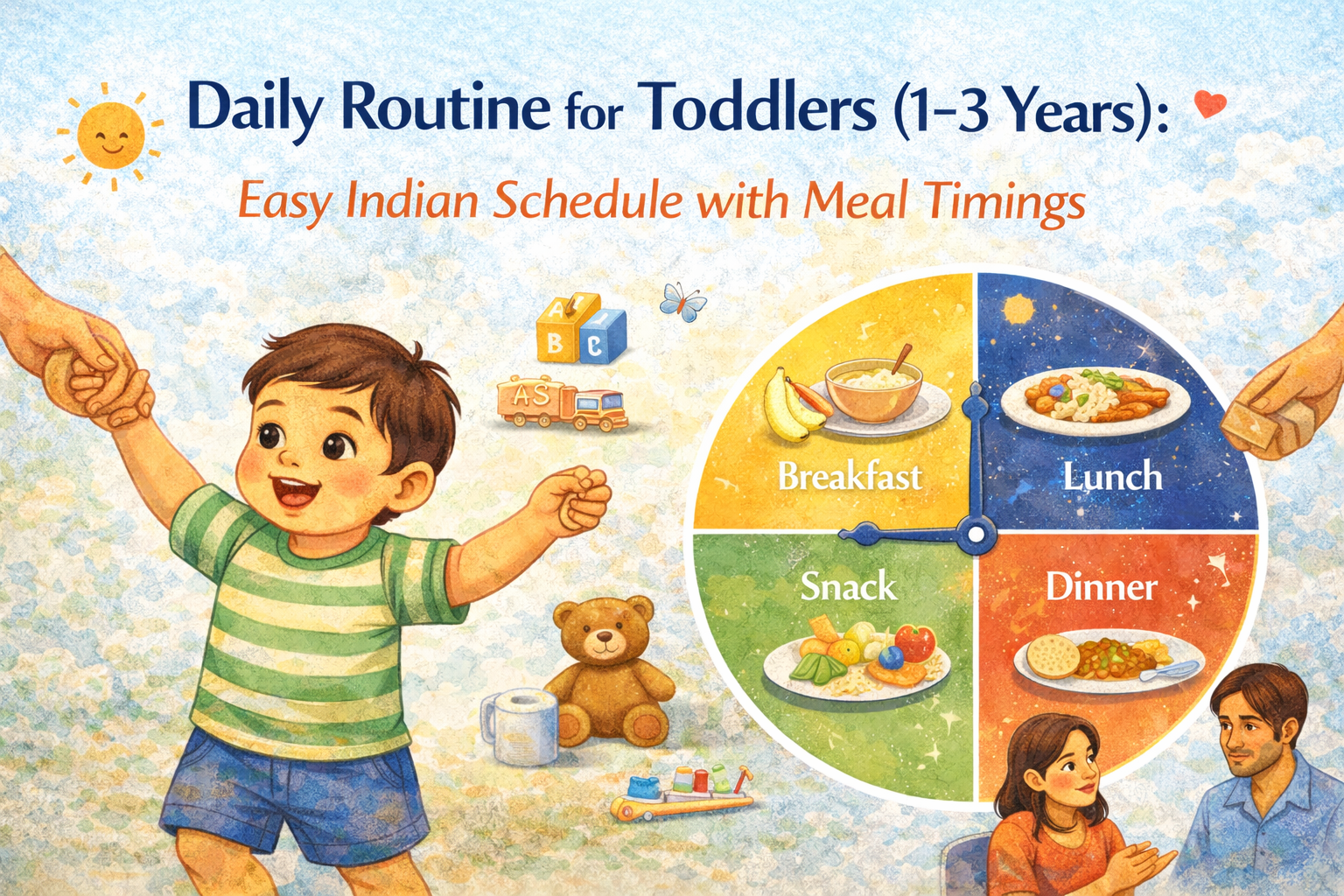

Daily Routine for Toddlers 1–3 Years – Easy Indian Schedule with Meal Timings
Momsaathi.com provides content for informational and educational purposes only. It is not intended to serve as a substitute for professional medical advice, diagnosis, or treatment. Always consult your pediatrician before following any toddler routine, especially if your child has sleep issues, feeding difficulties, or developmental concerns.
A daily routine for toddlers 1–3 years brings calm, predictability, and healthy habits to your home — especially in busy Indian families. Many Karnataka moms (and parents across India) struggle with tantrums, poor sleep, picky eating, or constant screen demands. A simple, flexible Indian schedule with fixed meal timings, play, naps, and family time can reduce chaos and support brain development, immunity, and emotional security.
This 2026 guide gives you an easy, realistic daily routine for toddlers 1–3 years — tailored for Indian homes (joint families, working parents, desi foods).
Why a Daily Routine Matters for Toddlers in India
Toddlers crave structure — it helps them feel safe and learn self-regulation. In Indian homes, routines also:
- Reduce tantrums (predictability lowers frustration)
- Improve sleep (consistent timings = better melatonin rhythm)
- Support healthy eating (fixed meal times prevent grazing/junk)
- Balance screen time with real play
- Give parents breathing room
Sample Daily Routine for Toddlers 1–3 Years (Indian Family)
This is a flexible template — adjust ±30–60 min based on your child’s natural rhythm and your work/family needs.
Wake-up & Morning Routine (6:30–8:00 AM)
- Wake-up gently (soft music or sunlight)
- Diaper change + face wash + quick oil massage (if tradition)
- Breastfeed / formula / cow milk (if >1 year)
- 15–20 min free play or cuddles
Tip: Start day with calm — avoid phone first thing.
Breakfast & Morning Activity (8:00–9:30 AM)
- Breakfast time (fixed slot): Ragi porridge, idli-sambar, poha, upma, banana + milk
- 30–45 min outdoor play or indoor sensory play (balls, blocks, water play)
Desi tip: Involve grandparents in morning stories/songs — builds bonding.
Mid-Morning Snack & Learning Time (9:30–11:00 AM)
- Snack: Fruit (apple, papaya, banana) or khakra/murmura
- 30–45 min focused activity: Colors, shapes, puzzles, simple rhymes, or reading books
- 15 min music/dance (Bollywood rhymes or rhymes in Kannada/Tamil/Hindi)
Lunch & Nap Time (11:00 AM–2:30 PM)
- Lunch (11:30–12:30): Rice + dal + sabzi + curd (small portions)
- Post-lunch wind-down: Story or lullaby
- Nap: 1–2 hours (most toddlers 1–3 years need this)
Tip: Dark, cool room + white noise (fan sound) helps.
Afternoon Play & Snack (2:30–5:00 PM)
- Wake-up milk + snack: Sprouts chaat, paneer cubes, fruit, or biscuit with milk
- 60–90 min active play: Park, cycling, ball games, or messy play (rice/flour sensory)
- Limit screen to 0–15 min (educational rhymes only)
Evening Routine & Dinner (5:00–8:00 PM)
- Evening snack: Poha, upma, or khichdi
- Family time: 30 min with parents/grandparents (story, songs, light play)
- Dinner (7:00–7:30 PM): Light — roti + sabzi + dal or khichdi
- Bath + oil massage (if tradition) + pajamas
Bedtime Routine (8:00–9:00 PM)
- Wind-down: Dim lights, no screens 60 min before
- Story or lullaby (Panchatantra, Ramayana tales)
- Bedtime milk + cuddles
- Lights out: 8:30–9:00 PM (most toddlers need 11–13 hours sleep)
Note: Adjust dinner/bedtime if your toddler wakes early — consistency matters more than exact hour.
Tips to Make This Daily Routine for Toddlers 1–3 Years Work in Indian Homes
- Involve family: Grandparents can handle stories/outdoor play — reduces mom load
- Be flexible ±30 min — strict routines cause stress
- Use visual timetable (pictures on fridge) — toddlers love predictability
- Meal timings: Keep gaps 2.5–3 hours — prevents crankiness
- Screen rule: Max 30–60 min/day (educational only) — follow WHO/AAP guidelines
When to Adjust or Seek Help
Consult your pediatrician if:
- Toddler refuses meals consistently or shows poor weight gain
- Sleep is <10 hours/night or frequent night waking
- Extreme tantrums or developmental delays
- Signs of anemia (pale skin, fatigue, poor appetite)
In India, free checks are available at Anganwadi, government hospitals, or well-baby clinics.
Final Words for Indian Moms
A simple daily routine for toddlers 1–3 years creates calm, healthy habits — and gives you sanity in busy Indian homes. Start with 2–3 fixed points (meals + bedtime) — the rest will fall into place.
What’s your toddler’s favorite part of the day? Share your routine tweaks in the comments — let’s help each other, Karnataka moms!
Related Articles on Momsaathi.com:
- Pregnancy Tips India 2026
- Week-by-Week Pregnancy Guide India
- Foods to Eat During Pregnancy in India
- Signs Baby Getting Enough Breast Milk
External Resources: