

MomSaathi.com provides content for informational and educational purposes only. It is not intended to serve as a substitute for professional medical advice, diagnosis, or treatment. Always consult a pediatrician or nutritionist before making changes to your baby’s diet.
As your baby grows from 4 to 12 months, their nutritional needs evolve rapidly. This period marks the transition from exclusive milk feeds to introducing solids, laying the foundation for healthy eating habits. According to the latest guidelines from the World Health Organization (WHO) and the Indian Council of Medical Research-National Institute of Nutrition (ICMR-NIN) updated in 2024, exclusive breastfeeding is recommended for the first 6 months, with complementary feeding starting thereafter while continuing breastfeeding up to 2 years or beyond. In India, where cultural foods like dal, ragi, and khichdi play a key role, tailoring nutrition to local availability ensures balanced growth. This guide, relevant for parents in Bengaluru and Karnataka, covers age-specific recommendations, sample meal plans, and tips to support your little one’s development.
The Importance of Nutrition in the First Year
From 4 to 12 months, babies need nutrients for brain development, immune support, and physical growth. Key requirements include:
- Iron: Crucial from 6 months as stores deplete; sources like ragi porridge or spinach.
- Protein: For muscle growth; from dal, paneer, or eggs.
- Vitamins and Minerals: Folate from greens, vitamin C from fruits like guava or oranges.
- Calories: 700–800 at 6 months, increasing to 1,000–1,400 by 12 months.
Aim for a variety of foods from all groups: grains, fruits/veggies, dairy, proteins, and fats. Continue breastfeeding on demand (3–5 times daily) as it provides 50–70% of calories even after solids start.
4–6 Months: Focus on Exclusive Breastfeeding
Do not introduce solids before 6 months unless advised by a doctor, as per WHO and Indian Academy of Pediatrics (IAP) guidelines. This prevents risks like allergies or digestive issues.
- Feeding Schedule: Breastfeed 8–12 times per day, on demand. If using formula, follow package instructions (about 150–200 ml per kg body weight daily).
- Signs of Readiness for Solids (Around 6 Months): Sits with support, shows interest in food, loses tongue-thrust reflex.
- What to Avoid: No water, juices, or solids—breast milk or formula meets all needs.
If your baby seems hungry often, consult a pediatrician for iron supplements if needed, especially in iron-deficient regions like parts of Karnataka.
Introducing Complementary Foods at 6 Months
Start solids at exactly 6 months with soft, mashed foods. Begin with 2–3 spoonfuls, 2–3 times a day, alongside breastfeeding.
- First Foods: Iron-rich options like ragi porridge, mashed banana, or apple puree. Introduce one new food every 3–5 days to watch for allergies.
- Texture: Pureed or mashed for easy swallowing.
- Indian Favorites: Soft khichdi (rice + moong dal), vegetable purees (carrot, pumpkin), or fruit mashes (papaya, chikku).
Gradually increase to semi-solid consistency. Offer water in a sippy cup after feeds.
6–9 Months: Building Variety and Frequency
By 7–8 months, offer 3 meals a day (2/3 cup each) plus 1–2 snacks, totaling 3–4 feeds. Focus on nutrient-dense foods.
Recommended Foods
- Grains: Ragi, suji, broken wheat porridge.
- Fruits/Veggies: Mashed apple, pear, carrot, beetroot, spinach (palak).
- Proteins: Soft dal, yogurt, paneer.
- Fats: Ghee in moderation for energy.
Avoid honey (botulism risk), salt/sugar (under 1 year), and choking hazards like nuts.
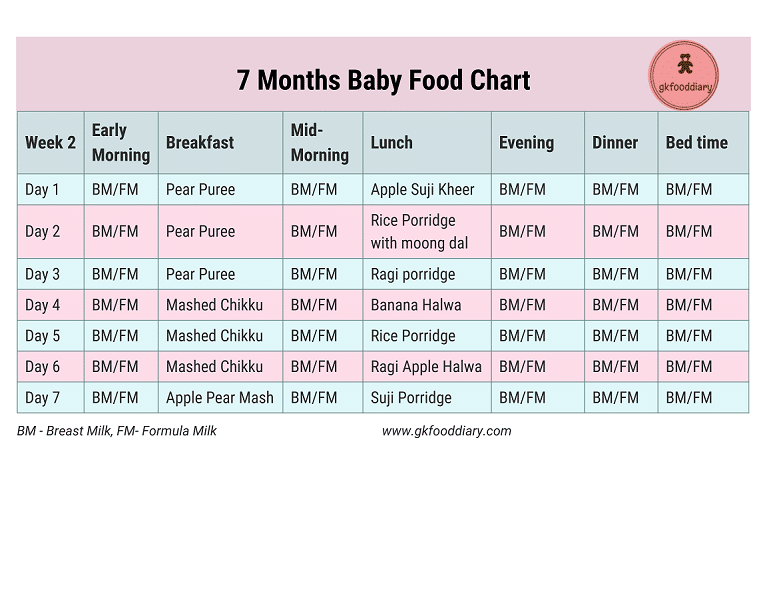
Sample 7-Month Meal Plan
Here’s a weekly chart adapted for Indian homes:
| Day | Early Morning | Breakfast | Mid-Morning | Lunch | Evening Snack | Dinner | Bedtime |
|---|---|---|---|---|---|---|---|
| Mon | BM/FM | Ragi Apple Porridge | BM/FM | Ghee Rice | Yogurt with Fruit | Millet Porridge | BM/FM |
| Tue | BM/FM | Pear Puree | BM/FM | Broken Wheat Khichdi | Lentil Soup | Curd Rice | BM/FM |
| Wed | BM/FM | Khichdi | BM/FM | Rice with Curd | Boiled Vegetable Bowl | Rice Porridge | BM/FM |
| Thu | BM/FM | Wheat Pancakes | BM/FM | Fish Puree | Carrot Badam Kheer | Ragi Porridge | BM/FM |
| Fri | BM/FM | Idli with Dal | BM/FM | Khichdi | Banana | Moong Dal Khichdi | BM/FM |
(BM = Breast Milk, FM = Formula Milk. Portions: 2–3 tbsp per meal.)
For visual inspiration, here’s a sample Indian baby food chart:
![Indian Baby Food Chart - Ultimate Guide for 0-12 Months Old [2021 Updated]](https://www.mfine.co/wp-content/themes/Divi/images/food_chart_7_month_meal_chart.png)
9–12 Months: Towards Family Foods
Increase to 3–4 meals (3/4–1 cup each) plus 2 snacks. Introduce finger foods for self-feeding skills.
- New Introductions: Eggs, fish (low-mercury), cheese, oranges, strawberries, corn.
- Textures: Finely chopped or soft pieces; encourage self-feeding with safe items like banana slices.
- Indian Options: Idli, dosa, chapati dipped in dal, vegetable upma, poha.
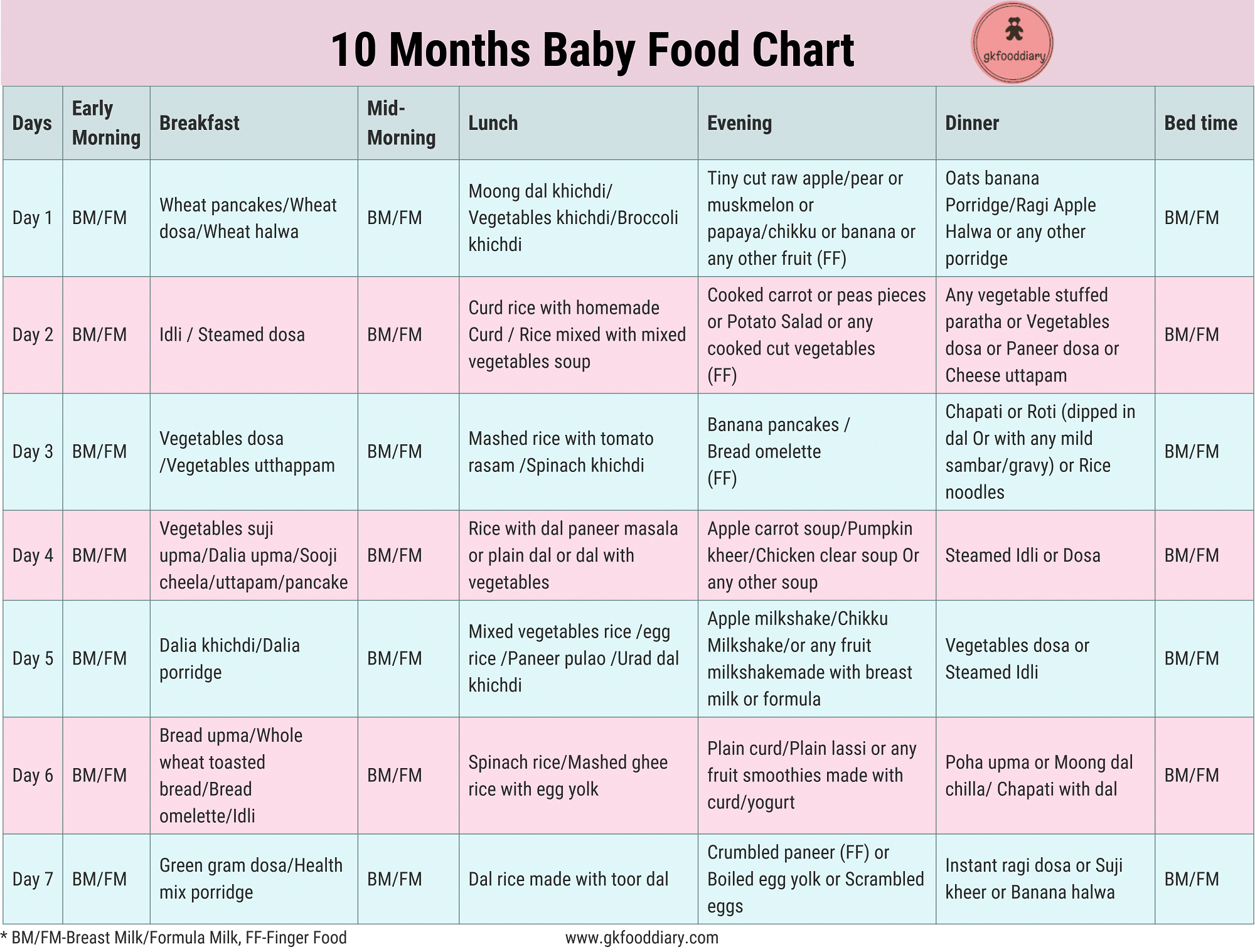
Sample 10-Month Meal Plan
| Day | Early Morning | Breakfast | Mid-Morning | Lunch | Evening Snack | Dinner | Bedtime |
|---|---|---|---|---|---|---|---|
| 1 | BM/FM | Wheat Pancakes/Wheat Halwa | BM/FM | Moong Dal Khichdi/Vegetables Khichdi | Tiny Cut Apple/Pear | Oats Banana Porridge | BM/FM |
| 2 | BM/FM | Idli/Steamed Dosa | BM/FM | Curd Rice with Veggies | Cooked Carrot/Peas | Vegetable Dosa | BM/FM |
| 3 | BM/FM | Vegetables Dosa | BM/FM | Mashed Rice with Tomato Rasam | Banana Pancakes | Chapati with Dal | BM/FM |
| 4 | BM/FM | Vegetables Suji Upma | BM/FM | Rice with Dal Paneer Masala | Apple Carrot Soup | Steamed Idli/Dosa | BM/FM |
| 5 | BM/FM | Dalia Khichdi | BM/FM | Mixed Veggies Rice/Egg Rice | Apple Milkshake | Vegetables Dosa | BM/FM |
| 6 | BM/FM | Bread Upma | BM/FM | Spinach Rice/Mashed Ghee Rice | Plain Curd Smoothie | Poha Upma | BM/FM |
| 7 | BM/FM | Green Gram Dosa | BM/FM | Dal Rice with Toor Dal | Crumbled Paneer | Instant Ragi Dosa | BM/FM |
For more ideas:
Safety Tips and Common Concerns
- Allergies: Introduce common allergens (eggs, fish, nuts) one at a time after 6 months.
- Choking Prevention: No whole grapes, nuts, or hard foods; supervise feeds.
- Hygiene: Use clean utensils; boil water for mixing.
- Picky Eating: Be patient; offer variety without force.
- Supplements: Iron drops if anemic, as per doctor’s advice—common in India.
In Karnataka, leverage local produce like ragi (finger millet) for iron-rich porridges or seasonal fruits from Bengaluru markets.
Final Thoughts
Feeding your baby from 4–12 months is about balance, patience, and joy. Stick to guidelines, monitor growth via regular check-ups, and enjoy this bonding time. If in Bengaluru, consider consulting experts at local hospitals like Cloudnine or government NHM centers. What’s your favorite desi baby food? Share in the comments!
Related Articles on MomSaathi.com:
- First 1000 Days Nutrition India
- Signs Baby Getting Enough Breast Milk
External Resources:
- WHO Infant Feeding Facts
- ICMR-NIN Dietary Guidelines